
The House of Representatives last week advanced one of the most consequential constitutional reforms since Nigeria’s return to democratic rule by approving a bill to establish state police. While most Nigerians have welcomed the proposal as the long-awaited answer to the country’s security challenges, the walkout by minority lawmakers underscored an uncomfortable truth. There are compelling reasons to question the wisdom of handing coercive police powers to state governments. Before the nation embraces state police as a cure-all, it must confront the possibility that today’s solution could become tomorrow’s instrument of political oppression.
The Nigerian Police is established under the 1999 Constitution of the Federal Republic of Nigeria and regulated by the Police Act. Since independence, policing has remained one of the most debated aspects of Nigeria’s governance structure. Recently, owing to the resurgence of terrorists’ activities, there has been renewed agitation for constitutional amendment to permit the creation of state police, with proponents arguing that decentralised policing will improve security, enhance intelligence gathering, and enable communities to respond more effectively to local threats and the menace of terrorists.
At face value, the argument for state police appears compelling. Nigeria is a large and diverse nation with security challenges that differ significantly from one region to another. A police officer who understands the language, culture, and peculiar security concerns of a community may arguably be better positioned to prevent crime than an officer deployed from Force Headquarters, Kam Salem House, Abuja.
Countries with federal systems such as Australia, Canada, and the United States operate multi-layers of policing, including state and local government-level policing structures. Therefore, the argument that Nigeria needs a more decentralised security system is not without merit. However, while the idea may appear attractive, Nigeria’s political realities compel a deeper examination of the dangers involved in giving state governors direct control over an armed security institution like the police.
The greatest concern is not necessarily with the concept of state police itself, but the possibility that it could become another instrument of political control in the hands of already powerful state governors. Nigeria’s democratic experience has shown that some political leaders struggle with the principles of separation of powers, respect for opposition, and institutional independence.
Some, if not many, equate themselves with the state. Introducing state police without strong Page 1 of 4constitutional safeguards may therefore create an avenue for some governors to transform the police into personal political tools.
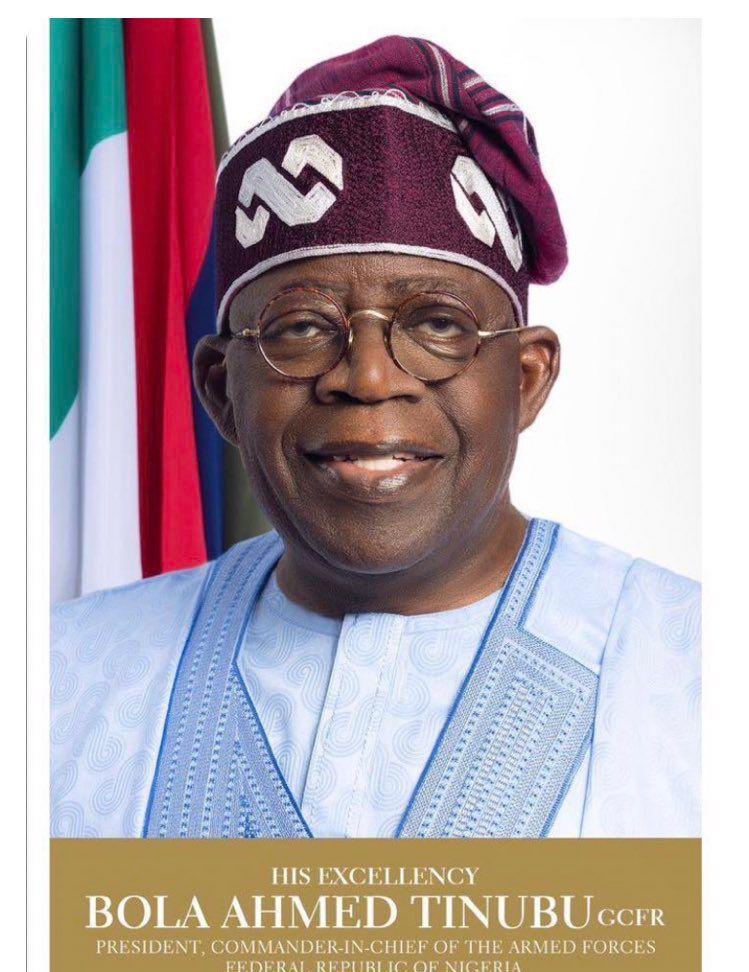
The Nigerian governor already occupies an extremely powerful position under the current constitutional arrangement. As the Chief Executive of the state, the governor controls enormous political and financial resources and influences many state institutions. Their resources can be said to have quadrupled since the removal of the fuel subsidy by the Renewed Hope Agenda of President Bola Tinubu. Giving such an office direct command over an armed security agency could create a dangerous concentration of power, particularly in an environment where democratic institutions are still evolving.
The experience with the former Edo State Governor Godwin Obaseki illustrates why caution is necessary. Without the benefit of a state police and only with his trained thugs, his administration successfully resisted the inauguration of fourteen members of the Edo State House of Assembly
duly elected during the 2019 legislative elections. The episode generated widespread criticism from opposition figures and raised concerns about executive interference with legislative independence. Critics accused the administration of relying on political structures and non-state actors to enforce its position. Let us, for once, imagine state police in the hands of a Mallam El Rufai, the former governor of Kaduna State, who took pleasure in demolishing the houses of opposition figures and dissenting members of his party. He ruled Kaduna State like an emperor, and his words were law.
If these two governors cited as examples herein can exert such influence over political institutions without controlling a police force, what could happen if these governors had direct command over a state police structure?
A governor with authoritarian tendencies could potentially use the state police to intimidate political opponents, suppress legitimate criticisms, harass activists, and even punish members of his own party who dare to disagree with him. The danger is not limited to opposition parties.
Internal democracy within political parties already endangered could suffer more if elected representatives become afraid to challenge the governor because of the power of a state-controlled police force.
Another major concern is the possibility of legalising political thuggery. Nigeria has a long history of politicians using loyalists and informal security groups during elections and political disputes.
Instead of eliminating this problem, poorly designed state police may provide a pathway for political actors to recruit, empower, and arm loyalists under the official banner of maintaining security.
There is also the challenge of professionalism and neutrality. The Nigerian police, despite its many shortcomings, operates under a national command structure intended to provide some degree of uniformity and independence. State police may struggle to maintain professional standards if Page 2 of 4recruitment, promotion, discipline, and deployment become heavily influenced by state political authorities.
Funding is another serious issue. Many Nigerian states currently squander their huge resources and therefore struggle with basic responsibilities such as infrastructure development, healthcare, education, and even salary obligations. Maintaining an effective police force requires huge financial commitments in training, equipment, intelligence systems, welfare, and modern technology. Poorly funded state police commands may become ineffective or dependent on political sponsors.
There is also the danger of creating unequal security systems across the country. Wealthier states like Lagos, Rivers, and Delta may develop better-equipped police forces, while poorer states may operate weak and poorly resourced institutions. This could create a situation where the quality of security protection available to citizens depends largely on the wealth of their state government.
Furthermore, there must be careful consideration of possible conflicts between the state police and federal security agencies. Clear constitutional boundaries would be required to avoid disputes over command authority, jurisdiction, and national security responsibilities.
However, rejecting state police entirely would also ignore the genuine weaknesses of Nigeria’s current policing system. The Nigeria police has struggled with inadequate manpower, poor and outdated equipment, delayed response times, poor remuneration, and limited knowledge of local communities. The need for reform is undeniable.
An alternative solution: Federal Police, Local Deployment.
Rather than immediately creating state-controlled police structures, we should consider a hybrid approach that preserves federal control while improving local policing effectiveness.
One possible reform is to maintain the Nigeria police as a federally controlled institution but ensure that key officers, particularly commissioners of police (CPs) and Divisional Police Officers (DPOs), are deployed primarily to serve in their states of origin. The rank and file should be recruited and deployed to serve in the local government areas too.
Under this arrangement, police officers would remain employees of the Federal Government, operate under national standards, and remain accountable to federal institutions such as the Police Service Commission. However, their postings would take into consideration their knowledge of local communities, culture, language, and security realities.
A Commissioner of Police serving in their state of origin is likely to possess a deeper understanding of local security challenges and stronger community networks. Likewise, a DPO who understands the local environment, traditional institutions, and social relationships may be better positioned to gather intelligence and build trust with residents. This model addresses one of the strongest arguments for state police- the need for local knowledge – without creating the risk of governors directly controlling armed security institutions and creating Frankenstein monsters therefrom!.
Page 3 of 4The fundamental concern about state police is not local policing itself; it is political capture. By retaining federal control over recruitment, training, discipline, promotions, and operational standards, Nigeria can achieve community-oriented policing while protecting police neutrality.
However, this arrangement must be carefully managed. Officers serving in their states of origin must remain loyal to the constitution and the Nigerian people, not to political leaders or local interests. Deployment should be based on professional considerations, while promotions and discipline must remain guided by merit. We must avoid replacing one problem with another. The objective is not to create ethnic or regional police structures but to create a more effective, responsive, and trusted police service for contemporary times.
A federal police system with strategic local deployment may therefore provide a safer middle ground, combining the strength of a unified national police institution with the advantages of local knowledge and community engagement. State police may be a solution, but it is not the only solution. Before we embark on a constitutional amendment with significant risks, we should first build safeguards against abuse of power.
The real issue is not whether policing should be centralised or decentralised. The real question is: how do we create a police system that is powerful enough to protect Nigerians but restrained enough to prevent political abuse?
State police can either become a historic reform that strengthens Nigeria’s security architecture or a dangerous weapon in the hands of political actors. We do not only need more police. We need better institutions, stronger checks and balances, and leaders who understand that security agencies exist to protect citizens, not to serve political interests.
Gatekeepers News is not liable for opinions expressed in this article; they’re strictly the writer’s