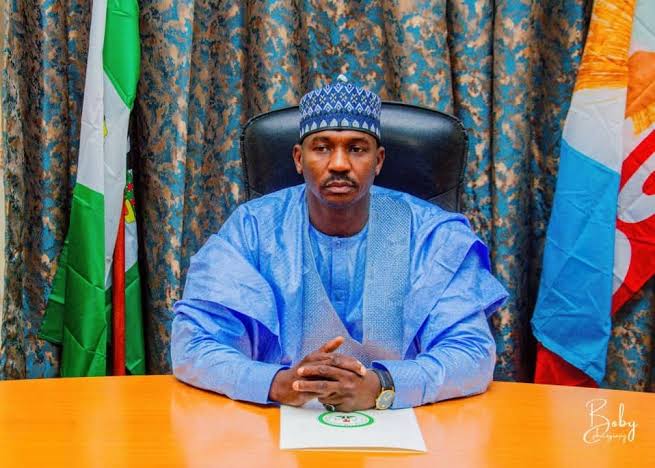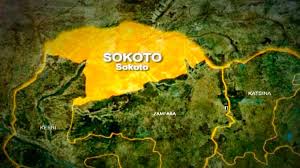
The political decimation of the Sokoto State chapters of the African Democratic Congress (ADC) and the Peoples Democratic Party (PDP), which, by the way, are one and the same, is now virtually complete. It is not just the consequence of their inability to conduct credible primaries, the leadership crises that have reduced both parties to shadows of their former selves, or the opportunities they squandered while in office. More fundamentally, it is the result of Governor Ahmed Aliyu’s performance in office, which has left the opposition dazed, and the unity of the All Progressives Congress (APC) led by the governor and Senator Aliyu Magatakarda Wamakko. Through a succession of self-inflicted setbacks, the opposition has steadily stripped itself of the capacity to compete. The latest wave of defections in Goronyo Local Government Area where thousands of ADC supporters joined the APC, is therefore not an isolated political development but the clearest indication yet that the opposition parties have effectively collapsed as Sokoto State heads towards the 2027 general election.
Even before the mass exodus of Goronyo, the opposition had suffered another crippling setback with the defection of Sa’idu Umar, popularly known as Ubandoma, the Peoples Democratic Party’s governorship candidate in the 2023 election and a close political ally of former Governor Aminu Tambuwal. His departure dealt a severe blow to the already weakened opposition parties. Like Ubandoma’s defection, the Goronyo political earthquake is far more significant than it may appear at first glance. Goronyo is not just another local government area in Sokoto State; it is a strategic part of the Sokoto East Senatorial District, a zone that has historically played a pivotal role in determining the outcome of elections. When an opposition party loses not only supporters but virtually its entire political structure in such a critical area, the implications extend far beyond the number of defectors.
Taken together, the defection of Ubandoma and the collapse of the opposition’s structure in Goronyo and other areas have revealed the likely direction of the 2027 general election in Sokoto State, the Seat of the Caliphate. Every major defection further weakens the opposition’s capacity to organise, mobilise and inspire confidence in the people, while simultaneously reinforcing the fact that the APC has consolidated its dominance long before the first ballot is cast.
In politics, perception is often just as important as the reality. If voters, politicians and party members perceive that a party is united and likely to win, they naturally gravitate towards it. Conversely, when a party appears weak and divided, defections become self-reinforcing as members seek political survival elsewhere. That is precisely the momentum the APC has built across Sokoto State.
A look at the 2023 election results puts the opposition’s present predicament in proper perspective. In the presidential election, despite having a sitting PDP governor in Aminu Tambuwal and the advantage of incumbency, the PDP’s candidate, Atiku Abubakar, narrowly defeated the APC’s Bola Ahmed Tinubu by just 3,235 votes, polling 288,679 votes against Tinubu’s 285,444. Barely three weeks later, the APC reversed that outcome by winning the governorship election with 453,661 votes against the PDP’s 404,632, while also securing a majority in the Sokoto State House of Assembly. Those victories were achieved when the opposition was in power and its political structure intact. With the subsequent defections of key leaders, the collapse of local party structures and the continuing loss of grassroots support, reproducing even that performance in 2027 appears increasingly improbable.
Another factor reinforcing the growing belief that the APC is on course for a landslide victory in 2027 is its remarkable internal cohesion. As the election season gathers momentum, the party is entering the contest as a united political family under the leadership of Governor Ahmed Aliyu and Senator Aliyu Magatakarda Wamakko. Combined with the advantage of incumbency, visible projects across critical sectors and a well-coordinated political organisation, the APC enjoys strengths that the opposition presently lacks. By contrast, the opposition continues to grapple with leadership disputes, questions over candidacy and an identity crisis. It also carries the baggage of the Aminu Tambuwal administration, which many voters continue to associate with poor performance, abandoned projects, lack of investment in education and healthcare, outstanding pension liabilities and Aminu Tambuwal placing his presidential ambition over governance.
This explains why the opposition’s crisis goes far beyond recent defections or the more defections that are expected in the coming days. In 2023, the people of Sokoto State placed their confidence in Governor Ahmed Aliyu by rejecting the candidate strongly backed by the previous administration. Three years later, that decision has been vindicated. Having witnessed improvements in infrastructure, education, healthcare, workers’ welfare and the prudent management of public resources, a growing number of voters are convinced they made the right choice. That explains the increasing sentiment that Governor Aliyu deserves not only re-election but with an even stronger mandate in the 2027 elections.
Yet, even with these political advantages, neither Governor Aliyu nor the APC can afford the luxury of complacency. Politics has repeatedly shown that the greatest threat to a successful administration like that of Governor Aliyu often comes not from a weak opposition but from overconfidence within its own ranks. The governor must therefore remain focused on delivering greater dividends of democracy, while the APC must preserve its unity and continue to treat its members with fairness, respect and a sense of belonging. It’s a well known fact that a political party grows stronger when loyalty of its members is rewarded, grievances are addressed promptly and every member feels valued.
A vibrant democracy definitely benefits from a credible opposition capable of presenting voters with alternatives. The APC cannot be blamed for the fact that its principal rivals have weakened themselves through internal crises, poor leadership and conflicting ambitions. It’s worth asking what happened to the ADC, the much-publicised coalition that was touted as the platform that would unseat the APC in 2027? What happened to the confidence with which its members proclaimed it as the next party in power in Sokoto State? The answers are obvious. Prominent personalities alone do not sustain political parties. Enduring political success depends on discipline, internal cohesion, effective leadership, a shared vision and the ability to manage competing ambitions.
Clearly, the ADC and the PDP have lost considerable ground ahead of the 2027 elections. But losing the 2027 election will not be their greatest tragedy. The greater challenge will be whether they can rebuild before the 2031 elections. Their internal crisis over the governorship ticket exposed deeper weaknesses in internal democracy and conflict management. Every political party experiences competition and disagreement, but those that survive are the ones with the mechanism for managing ambition and preserving unity. The APC itself offers a useful example, having evolved from opposition into the dominant political force it is today.
For the APC, these developments reinforce an already favourable political environment. Governor Ahmed Aliyu’s performance has strengthened the party’s standing across the state, while his close political synergy with Senator Aliyu Magatakarda Wamakko has further cemented the party ahead of the election. The leader who is a proven old fox has continued to exploit the divisions within the opposition parties. Instead of finding cracks to widen, the opposition has watched the APC become even more cohesive while its own internal contradictions continue to deepen.
Unless an extraordinary and unforeseen development intervenes, the political trajectory – the decisive victory of the APC is obvious. The cumulative effect of Governor Ahmed Aliyu’s performance, the unity of the APC and the continuing disintegration of the opposition has transformed the 2027 election from what once promised to be a competitive contest into one defined by a single question—not who will win, but by what margin. Should that outcome materialise, it may well settle, perhaps decisively, the long-running question of which political tendency now commands Sokoto State politics.
Gatekeepers News is not liable for opinions expressed in this article; they’re strictly the writer’s.