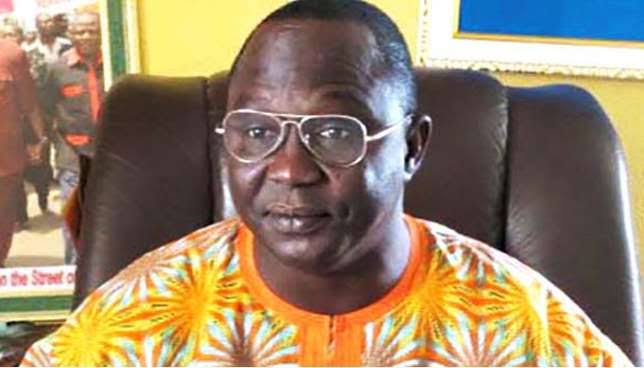
The Nigerian Education Loan Fund (NELFUND) spends approximately N16 billion every month on student upkeep allowances, according to its Managing Director, Akintunde Sawyerr.
reports that Sawyerr disclosed this on Monday while speaking on Arise TV, as he addressed concerns over the sustainability of the federal government’s student loan scheme.
He said NELFUND had received about 1.8 million applications, processed roughly 1.5 million, and provided support to about 850,000 beneficiaries.
According to him, the scheme is yet to begin recovering the loans disbursed to beneficiaries, creating a significant recurring financial obligation for the agency.
“It’s a loan scheme; it’s two years plus old. We’re not getting any recoveries of the loans as of today,” Sawyerr said.
“But how do you keep it going? We have a bill every month as of today of about N16 billion in upkeep alone. How do you maintain that?”
Sawyerr said the government was considering alternative funding sources to sustain NELFUND, including the possibility of deploying liquid assets recovered from cases involving the alleged misappropriation of public funds.
He, however, dismissed reports suggesting that NELFUND was involved in any arrangement to plea-bargain with individuals accused of financial crimes in exchange for funding for the scheme.
“The President did not say go and plea bargain or set up a plea bargain arrangement with those who have misappropriated Nigeria’s funds and then give it to NELFUND,” he said.
The NELFUND boss explained that the recovery of misappropriated funds and proceeds of crime was a separate matter from the operations of the education loan agency.
He said the government was instead considering whether liquid assets recovered after the conclusion of relevant cases could eventually be deployed for the benefit of Nigerians affected by the consequences of such crimes, particularly young people seeking access to education.
NELFUND Denies Financial Misappropriation
Sawyerr also rejected allegations of financial misappropriation within NELFUND, insisting that there was “no evidence” to support such claims.
“There is no evidence of any financial misappropriation by the NELFUND,” he said.
He explained that payments to beneficiary institutions were made electronically and directly, while students’ upkeep allowances were transferred into their bank accounts.
According to him, the system was designed to be “completely agnostic” in selecting beneficiaries and does not discriminate based on gender, ethnicity or personal connections.
He said applicants are required to meet conditions including having a National Identification Number (NIN), Joint Admissions and Matriculation Board (JAMB) registration number, proof of admission and a bank account.
NELFUND, he added, avoids cash transactions as part of measures designed to promote transparency in the disbursement process.
Sawyerr: Tinubu Will Follow Legal Process
On the legality of using recovered proceeds of crime to support the student loan scheme, Sawyerr said he was not a lawyer but expressed confidence that President Bola Tinubu would operate within the country’s constitutional and legal framework.
“There is absolutely no evidence today that the law is going to be sidestepped, that the National Assembly is going to be sidestepped,” he said.
He added that, to his knowledge, no executive order had been issued to bypass existing legal provisions on the matter.
Sawyerr stressed that proceeds of crime could not serve as NELFUND’s long-term funding model, noting that the law establishing the agency allows it to receive charitable donations, attract investments and engage in activities capable of generating returns.
“We can’t possibly rely on proceeds of crime in the long term,” he said.
He added that private-sector interest in supporting NELFUND was growing because of the potential impact of expanded access to education on employment, crime, banditry and insurgency.