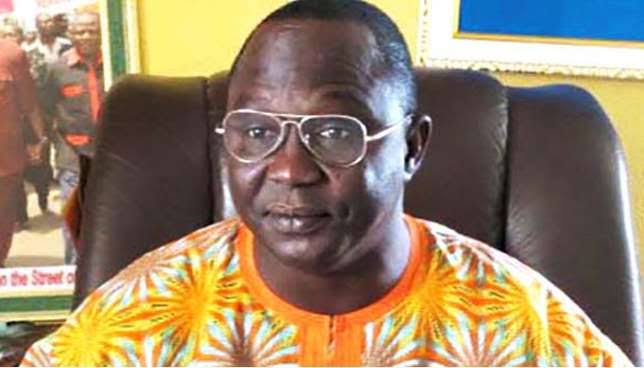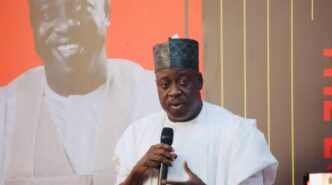
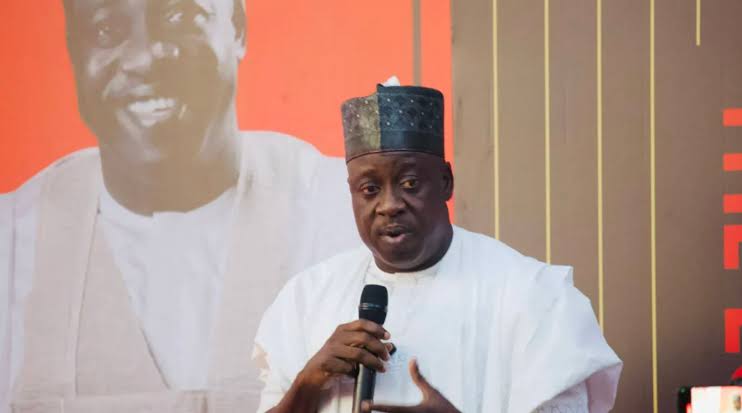
Bolaji Abdullahi, National Publicity Secretary of the African Democratic Congress (ADC), says Peter Obi’s position on petrol subsidy could threaten the proposed coalition of opposition parties ahead of the 2027 general election.
Gatekeepers News reports that Abdullahi spoke on Tuesday during an appearance on Daybreak, an Arise Television programme, while explaining the absence of Atiku Abubakar, the ADC presidential candidate, from the G100 opposition summit held in Abuja on Monday.
The summit brought together leaders of six opposition parties — the ADC, Allied Peoples Movement (APM), Nigeria Democratic Congress (NDC), Peoples Democratic Party (PDP), Peoples Redemption Party (PRP) and Social Democratic Party (SDP).
The coalition is seeking to establish what it describes as a “government of national competence” that would operate for a single four-year transitional term after the 2027 election.
Some presidential candidates, including Donald Duke of the PRP and Adewole Adebayo of the SDP, attended the summit.
However, Atiku and Obi, two prominent opposition figures ahead of the 2027 presidential election, were absent from the meeting, prompting questions about the future of the proposed coalition.
The development comes amid differences between Atiku and Obi over petrol subsidy.
While Atiku has advocated the restoration of the subsidy, Obi has said he would maintain its removal, arguing that mismanagement of the gains from subsidy reform is not sufficient reason to reverse the policy.
Atiku, Obi and other opposition figures had formed a coalition in July 2025 and adopted the ADC as the platform through which they intended to challenge the ruling All Progressives Congress (APC) in 2027.
The arrangement, however, failed to materialise, with Obi and Rabiu Kwankwaso, his running mate at the time, subsequently joining the NDC.
‘What would be the basis for a merger?’
Abdullahi said the disagreement over subsidy policy would have to be addressed if the new coalition was to succeed.
“That’s something the promoters of this coalition will have to address. If Peter Obi doesn’t believe in the return of subsidy while we do, then what would be the basis for a merger?” he asked.
He said the ADC was prepared to work with parties that shared its position on the issue.
“For us, it’s non-negotiable. Our economists are examining the numbers in detail, and we’re convinced this is something we should pursue,” Abdullahi said.
The ADC spokesperson said his party remained firmly committed to the G100 coalition initiative but stressed that cooperation with other opposition parties was not a condition for defeating the incumbent.
“I agree with the objective that when opposition parties come together, they stand a better chance. But for us in the ADC, this conversation is not dependent on producing a single presidential candidate,” he said.
“We believe we can defeat President Bola Tinubu in 2027 on our own. If we’re able to negotiate this cooperation, it simply makes the job easier.”
Why Atiku was absent
Abdullahi explained that Atiku did not attend the G100 summit because the meeting was primarily focused on cooperation between political parties rather than individual presidential candidates.
“The summit, the way we understand it, is more about conversations between political parties than between candidates. It’s about exploring opportunities for cooperation among political parties,” he said.
“So it’s not consequential that Atiku Abubakar was not present. I was there, the party was highly represented. We had about four vice-chairmen at the G100 summit. ADC was fully represented and participated in the process.”