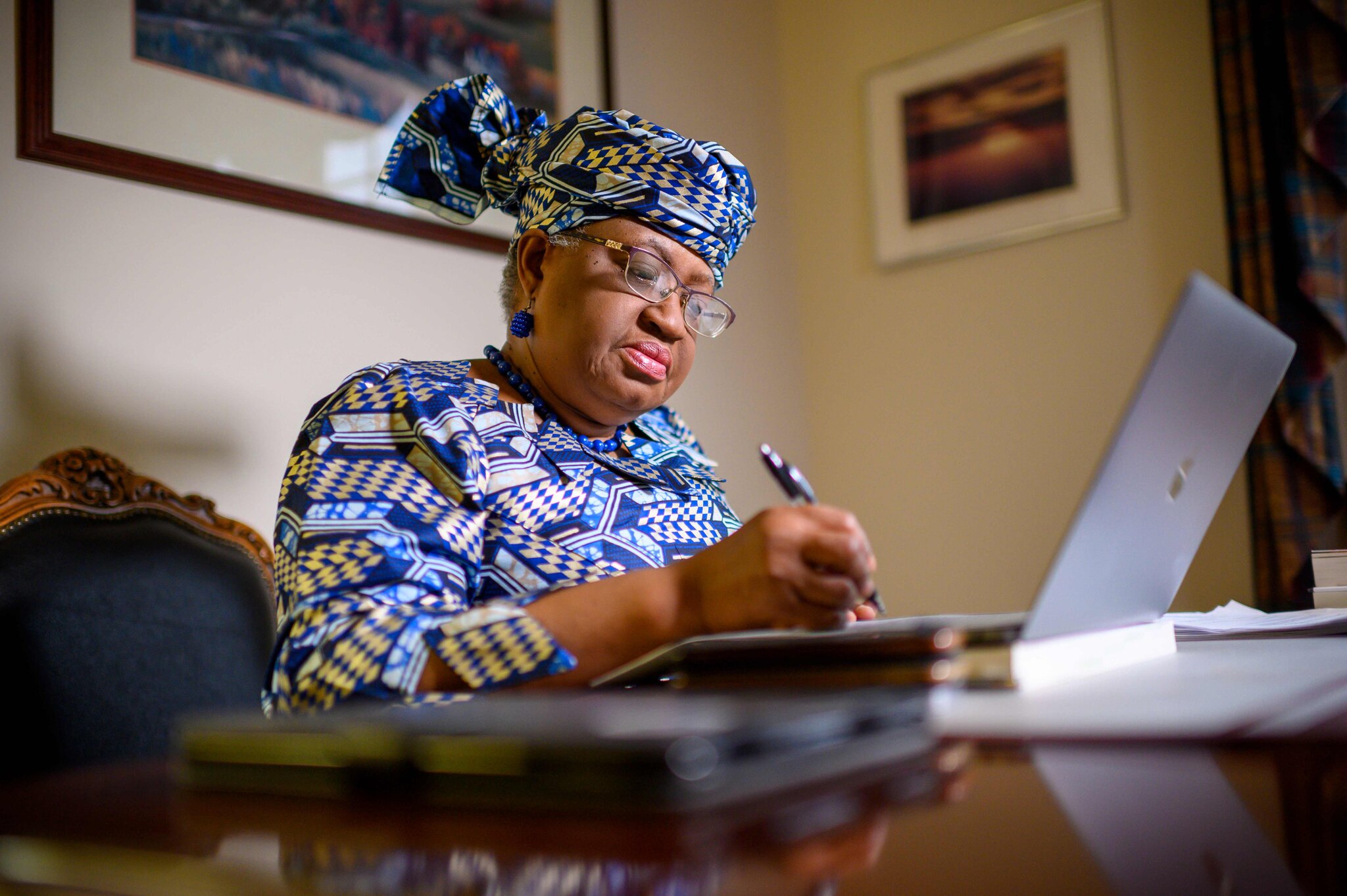
Ngozi Okonjo-Iweala, director-general of the World Trade Organisation (WTO), has urged countries to rethink globalisation and diversify production locations to strengthen supply chains and make global trade more resilient.
Gatekeepers News reports that in an interview with Bloomberg’s Francine Lacqua, Okonjo-Iweala said the WTO had developed a concept known as “re-globalisation”, which seeks to reduce countries’ dependence on a single location for the production of goods and services.
She explained that countries should spread production across different locations with comparative advantages, warning that building resilient supply chains takes years and requires early action.
“Efforts to diversify must begin now,” she said.
“The world is changing but should it change around the basic principles of what makes people human?” the WTO director-general asked.
“We have come up with a concept at the WTO that we call re-globalisation. We believe that we need to reimagine globalisation and reimagine value and supply chains in a way that builds greater resilience for the world instead of being dependent on one geography or one place.”
Okonjo-Iweala said global trade was worth approximately $33 trillion, with digitally delivered services emerging as its fastest-growing segment.
She noted that digital trade, which includes services such as movies, music, education and healthcare delivered online, was growing by about six per cent annually and was valued at approximately $4 trillion.
The WTO chief also expressed concern about increasing pressure on multilateral institutions, recalling that countries established such organisations after World War II because they recognised that certain global challenges could not be resolved by individual nations acting alone.
WTO Rules Need Updating
Okonjo-Iweala said global trade was facing unprecedented disruption and fragmentation, with some WTO members increasingly questioning whether existing trade rules adequately addressed their economic interests.
“Global trade is under tremendous stress and that is because many members of the WTO are beginning to feel that the rules no longer work for them the same way that they used to work in the past,” she said.
“The dissatisfaction is leading to unilateral behavior on the part of some.”
According to her, the rules must be updated to reflect changes in the global economy since the WTO was established, including the accession of China and the growing participation of other developing economies in international trade.
She stressed that the reform process should take into account the concerns of all member countries rather than being presented solely as a dispute between the United States and China.
“Making it a US and China problem is not recognising that many emerging markets and poorer developing countries also have problems with the system,” Okonjo-Iweala said.
The WTO director-general added that virtually all members recognised the need for reforms, urging the organisation to act promptly to address their concerns and ensure that global trade rules remain relevant to changing economic realities.