

Economic Community of West African States (ECOWAS) Parliament has called for stronger regional measures, improved law enforcement and increased funding to tackle child trafficking and child labour across West Africa.
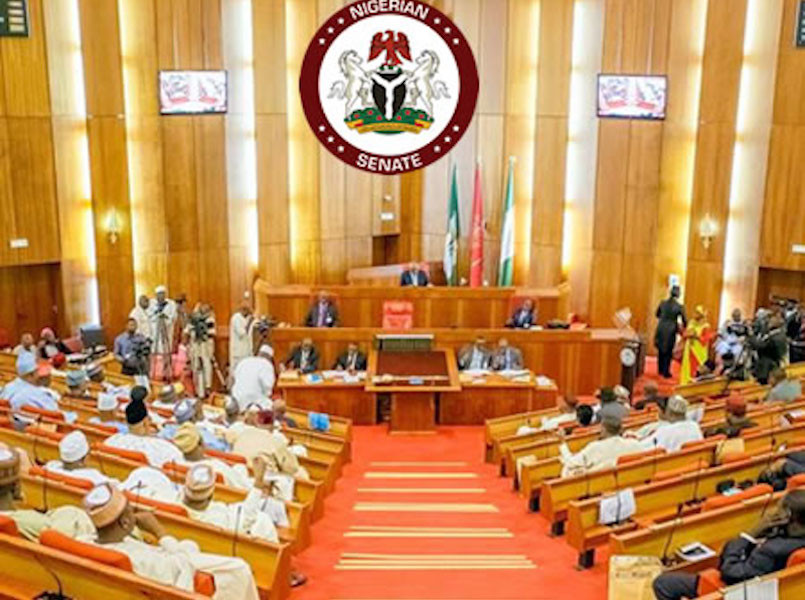
Gatekeepers News reports that the call was made on Saturday during a regional workshop on combating child trafficking and child labour, held as part of the 2026 Second Ordinary Session of the ECOWAS Parliament in Abuja.
The Speaker of the ECOWAS Parliament, Memounatou Ibrahima, said inadequate funding, weak enforcement of existing laws and poor coordination among institutions continued to expose children to exploitation.
She noted that despite the adoption of several legal frameworks and regional commitments, implementation remained a major challenge.
“When a child is a victim of trafficking or subjected to labour that undermines his or her health, schooling or development, it means that the most basic human rights of that child are being violated,” she said.
Ibrahima urged national parliaments to strengthen legal frameworks, scrutinise government budgets and ensure that authorities were held accountable for their child protection responsibilities.
She also called for clearly defined priorities and regular parliamentary monitoring to ensure that previous recommendations translated into concrete action.
Speaking on behalf of the Secretary-General of the Inter-Parliamentary Union (IPU), Martin Chungong, its Senior Programme Officer, Akiyo Afouda, disclosed that about 138 million children worldwide were involved in child labour, including 46.6 million in sub-Saharan Africa.
Afouda described child trafficking and child labour as serious human rights violations that threatened the economic and social development of the region.
He said, “Parliaments must not limit themselves to adopting laws or supporting declarations of principle. They must also ensure that the commitments made are translated into political action, budgetary resources and measurable results on the ground.”
He called for stronger cooperation among national legislatures, improved border monitoring, joint parliamentary missions to vulnerable communities and adequate staffing of labour inspection services.
Also speaking, the ECOWAS Commissioner for Human Development and Social Affairs, Professor Nassirou Arifari Bako, disclosed that available regional statistics covering 12,959 identified trafficking-related cases showed that 5,344 involved children.
He further revealed that identified human trafficking victims increased by approximately 31 per cent between 2019 and 2022.
Bako attributed the growing vulnerability of children to poverty, insecurity, displacement and inadequate access to education and social protection.
He cited the impact of insecurity in Burkina Faso, Mali and Niger, warning that displacement and the disruption of education had exposed more children to trafficking, forced labour and other forms of exploitation.
The commissioner also disclosed that trafficking-related prosecutions and judicial decisions across 12 member states increased from 388 in 2024 to 515 in 2025.
However, he expressed concern that fewer than 10 per cent of West Africans benefited from social protection programmes, which received less than one per cent of the region’s Gross Domestic Product.
He called for the establishment of victim-support funds at national and regional levels to provide rescued children with education, vocational training, psychosocial support and rehabilitation.
Bako also urged parliamentarians to use their oversight powers to visit communities affected by trafficking and child labour and recommend measures to address the situation.
The workshop called for coordinated regional action, stronger legislation, adequate funding and effective parliamentary oversight to protect children and prevent further exploitation across West Africa.