

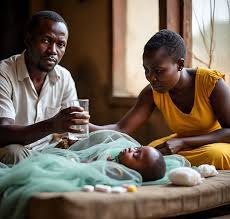
About 55 per cent of children in Nigeria are not protected from mosquito bites that transmit malaria, according to the Nigeria Malaria Indicator Survey (NMIS) 2025. The report indicates that only 44.9 per cent of children sleep under insecticide-treated nets (ITNs), leaving a significant number exposed to infection.
Gatekeepers News reports that the survey also revealed that 97 per cent of Nigeria’s population remains at risk of malaria, with young children, pregnant women, and unborn babies identified as the most vulnerable groups.
In response, the National Malaria Elimination Programme (NMEP) has emphasised the importance of using insecticide-treated nets as a key preventive measure. The agency noted that consistent use of ITNs has been proven to significantly reduce child mortality linked to malaria.
Speaking during a church service and medical outreach at The Father’s Church in Jahi, Abuja, ahead of the 2026 World Malaria Day, the National Coordinator of NMEP, Dr. Nnenna Ogbulafor, cautioned against self-diagnosis and treatment of malaria.
“It is not every fever that is malaria,” she told the congregation, urging individuals to get tested before taking any medication and to avoid self-medication.
Ogbulafor also advised pregnant women to register early for antenatal care in order to receive Sulfadoxine-Pyrimethamine (SP), a preventive treatment that protects both mother and unborn child. She recommended that the medication be taken at least three times before delivery.
She further urged Nigerians to promptly test all fever cases to confirm malaria and to ensure that only Artemisinin-based Combination Therapies (ACTs) are used for treatment. According to her, patients must also complete the full dosage to ensure effectiveness.
Also speaking, the Advocacy, Communication and Social Mobilisation Officer (ACSM), Mrs. Hope Obokoh, warned that improper treatment of malaria could lead to severe complications.
“When malaria is not treated early or properly, especially when patients fail to complete their treatment or use the wrong medicines, it can lead to severe malaria, other illnesses, drug resistance, coma or death,” she said.
Obokoh stressed the importance of using ACTs, describing them as safe, affordable, and effective.
“Insist on the use of ACT only. ACT is safe, affordable and effective. ACT is available in both private and public health facilities. ACT kills malaria parasites faster than any other anti-malarial medicine,” she said.
She added that although global progress has been made in the fight against malaria, Nigeria must continue to strengthen its efforts. According to her, malaria can be eliminated through proper health-seeking behaviour, including early testing, prompt treatment with ACTs, and strict adherence to prescribed medication.