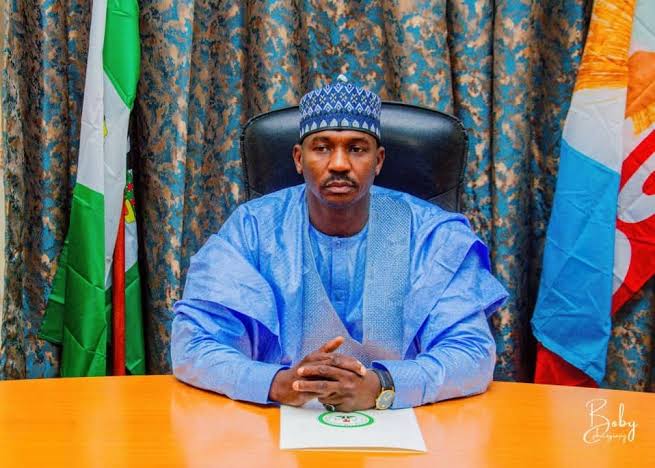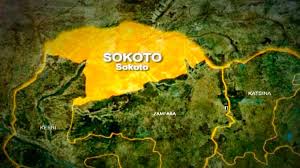


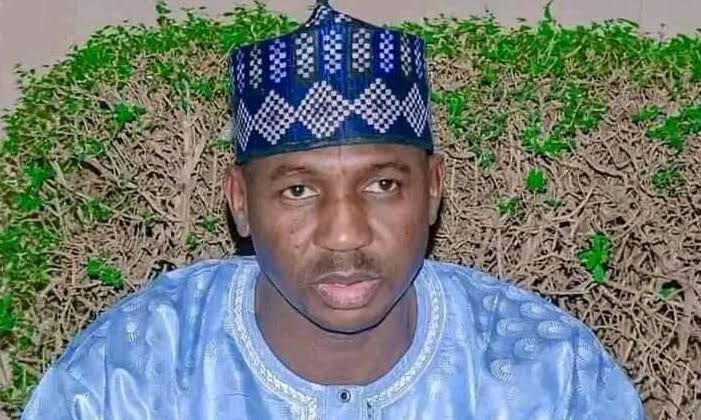
In many ways, governance is like an academic journey. It is demanding, structured, and ultimately judged not by intention, but by performance. For Ahmad Aliyu, a PhD holder in accountancy, this analogy is neither abstract nor unfamiliar. His academic discipline has clearly shaped his approach to leadership over the past three and a half years, and Sokoto State—the Seat of the Caliphate—is undoubtedly the better for it.
Gatekeepers News reports that in a sense, Governor Aliyu’s administration can be likened to a four-year degree programme comprising lectures, assignments, and continuous assessments. In governing the state, these templates have been translated into policy formulation, project execution, and crisis management. Now, as the 2027 governorship election approaches, it is time for the Governor—ever the serious student—to present his work to the Sokoto people for evaluation.
The Governor will be examined on his policy decisions, implementation choices, and his response to both expected and unforeseen challenges. In many areas, the answers are as clear as the morning sun. Other areas remain a work in progress, reflecting the reality that not all objectives can be fully realized within a single four-year tenure. As with any rigorous academic programme, there are areas of great strength and others that require refinement—a fact the administration itself has consistently acknowledged.
The people of Sokoto State are not passive observers. Their judgments have been formed through lived experience, everyday realities, and the steady accumulation of evidence over time. Because of this, the obvious outcome is not likely to unsettle the battle tested governor.
The question before the people is straightforward: Has Governor Aliyu justified progression to the next level?
The conversation about the governor’s second term must be situated within this framework. It is not a question of entitlement, but a natural consequence of sterling performance measured against public expectations. When viewed through the lens of his numerous accomplishments, his record speaks with clarity. By any verifiable standard, Governor Aliyu has demonstrated a level of performance that is both commendable and compelling. One could argue—without exaggeration—that he more than merits a second term and a resounding mandate from the electorate.
When Governor Aliyu assumed office in 2023, he inherited a state weighed down by socio-economic challenges, institutional fatigue, and unmet expectations. Basic services required revitalization, infrastructure gaps were evident, and public confidence needed rebuilding. It was a moment that called for both steady leadership and decisive action. As Chinua Achebe famously observed, “When the rain began to beat us, we did not know where we were going; but when it stopped, we knew where we had come from.” The people of Sokoto remain fully aware of their recent past and are well-positioned to judge the journey so far.
Meaningful improvements are now visible across several sectors. In both the Sokoto metropolis and rural communities, road projects have eased long-standing bottlenecks. Notably, the administration completed several abandoned or stalled projects, such as the Sokoto–Illela road corridor and key township roads. These efforts have restored vital transport links and reconnected underserved farming communities to urban markets. Commuters now navigate with ease, and traders benefit from reliable routes. Beyond physical transformation, these developments have reshaped the rhythm of daily life—cutting travel time, reducing stress, and unlocking new economic possibilities.
Governor Aliyu also confronted a backlog of unpaid gratuities totaling approximately ₦14 billion. This liability underscored the fiscal strain of the previous system and the human cost to retired public servants. Within the civil service, what was once uncertain has become routine. Workers now take timely salary payments for granted, a shift mirrored among pensioners who experience regular payments. This consistency marks a clear departure from the patterns of the Aminu Tambuwal administration. The resulting predictability has introduced financial stability for many households and restored confidence in governance.
In the health sector, the Governor has strengthened both infrastructure and service delivery. New general hospitals are under construction, while existing ones are being upgraded. To address manpower shortages, a “bonding policy” now requires medical professionals to serve in rural areas for at least two years. This is reinforced by improved remuneration to retain skilled workers. Additionally, upgraded primary healthcare centers now provide underserved communities with treatment closer to home.
In education, the Governor has signaled a clear awareness of long-standing gaps. Efforts include constructing more classrooms to ease congestion and rehabilitating selected schools. He has prioritized teacher recruitment and ensured that learning materials are readily available. At the secondary level, principals now receive a monthly imprest of ₦200,000, allowing them to meet pressing needs without bureaucratic delays. Furthermore, the government intervened to help medical students stranded by conflicts in Ukraine and Sudan, facilitating their absorption into Nigerian universities. This focus reflects a recognition that education is foundational to long-term progress.
To strengthen security, the administration has invested heavily in logistics and community-based structures. This includes a fleet of over 180 buffalo vehicles and thousands of motorcycles to enhance mobility and rapid response. The establishment of the Sokoto Community Guard Corps has also provided a platform for local participation in security management. Furthermore, the construction of military bases at Illela has strengthened the state’s defense in a sensitive frontier area. Collectively, these interventions point to a strategy focused on defeating terrorism.
In the sphere of religion, the government maintains active engagement with faith-based institutions. Beyond symbolic support, the administration has reconstructed more than 38 Jummah mosques, complete with boreholes and solar power. Alongside this, there is a sustained emphasis on promoting unity and peaceful coexistence.
Equally significant is the focus on youth empowerment. Through skills acquisition, entrepreneurship support, and structured employment initiatives, the administration is expanding economic opportunities. These programs address social vulnerability and frustration among young people, treating security and opportunity as reinforcing pillars of a stable society.
In governance, direction matters. It signals intent translated into action. This is not to suggest the administration is without shortcomings; challenges remain, and the Governor is determined to address them. Governance is rarely a linear story of success; it is a balance between ambition and practical execution.
To further demonstrate his commitment to public welfare, the Governor has overseen the drilling of numerous boreholes and the successful completion of several comprehensive water schemes across the state. This revitalization effort includes the systematic replacement of old, obsolete equipment with modern technology to ensure a more efficient and reliable water supply. Combined with his prudent management of resources and a principled refusal to borrow for project funding, these investments in both agriculture and basic utilities reflect a disciplined approach to governance that prioritizes long-term fiscal sustainability and the fundamental needs of the people.
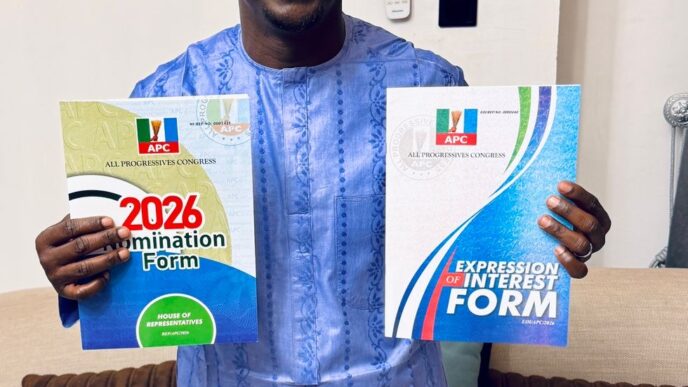
As the 2027 election approaches, the final grading remains. On February 6, 2027, Governor Ahmed Aliyu is poised to be returned for a well-deserved second term.
Gatekeepers News is not liable for opinions expressed in this article; they’re strictly the writer’s