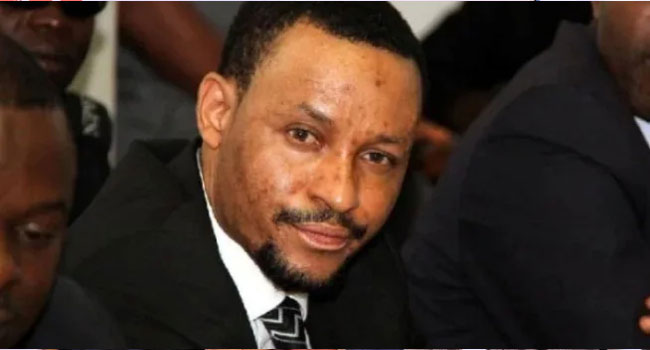



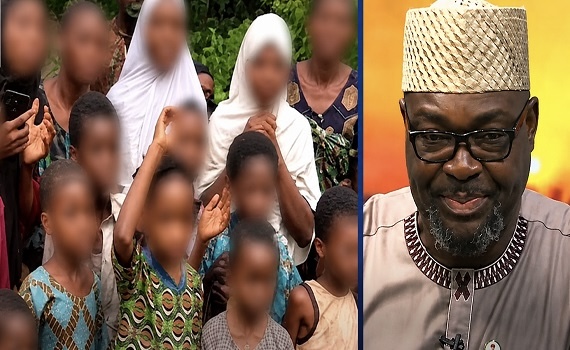
The Director-General of the Institute for Police and Security Research, Charles Omole, has called for increased funding and stronger commitment from state governments to ensure the success of the Safe School Initiative.
Gatekeepers News reports that speaking on Channels Television’s Sunrise Daily on Monday, Omole described the programme as a commendable intervention but said its implementation has fallen short because it has not received adequate resources.
“It’s a step in the right direction, but it needs to be resourced and, more importantly, the state governments need to step up and understand that our schools are not just the responsibility of the federal government alone,” he said.
The Safe School Initiative was launched in 2014 following the abduction of the Chibok schoolgirls by Boko Haram. It was introduced with an initial funding of N20 billion to improve school security, strengthen infrastructure and enhance emergency response systems.
In 2023, the Federal Government unveiled a N144.8 billion financing plan covering the 2023–2026 period, to be implemented through a partnership involving the Federal Government, state governments and development partners.
Omole stressed that securing schools goes beyond deploying security personnel, arguing that the safety of school infrastructure is equally important.
“If you are talking of safe schools, it’s not just about security forces around or close to schools or proximity to schools. Safe schools start with the nature of the school compound itself. Does the school have a fence? Is it secured as a facility itself?” he asked.
He noted that because most public schools are owned and managed by state governments, they have a central role to play in ensuring the initiative succeeds.
“Many of these schools are owned, managed and run by the state governments, and that is why I’m trying to say that in a Safe School Initiative, every school must have certain security measures in place,” Omole said.
The security expert also questioned the condition of many public schools, pointing to poor infrastructure as a major obstacle to creating safe learning environments.
“For example, to secure your perimeter. Are schools where, sometimes when it’s raining, children are learning inside what looks like a lagoon or lake in their classroom, the schools that are safe?” he asked.
Omole maintained that while the Federal Government initiated the Safe School Initiative, much of the responsibility for making schools secure lies with state governments.
“The point I’m making is that the Safe School Initiative is a good idea, but a lot of what needs to be done to actually secure the schools are not federal government activities; they are state government-level responsibilities,” he said.
He added that improving school infrastructure and installing basic security features would make it easier for federal security agencies to support efforts to protect schools.
“When you have a school that has good fencing, the perimeter and certain security measures are put in place, then the federal security agencies will now have a way of linking up with that school to make sure the school is secure,” Omole added.