

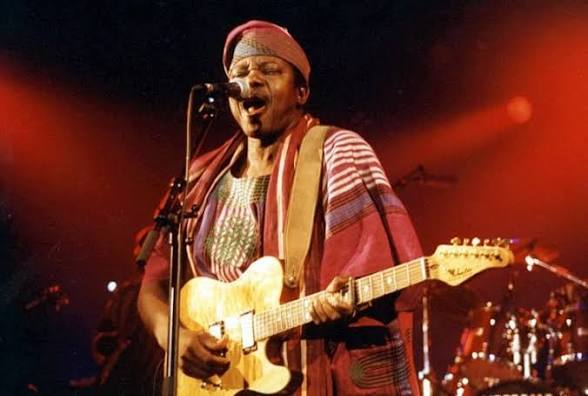
Legendary Nigerian Jùjú musician, King Sunny Ade, clocks 80 on September 22, 2026, marking more than six decades of a career that has made him one of Africa’s most influential musical figures.
Gatekeepers News reports that born Sunday Adeniyi Adegeye on September 22, 1946, the master guitarist and cultural ambassador has spent more than half a century shaping the sound of Nigerian, particularly Yoruba, high-society celebrations.
King Sunny Ade revolutionised traditional Jùjú music by incorporating the electric pedal steel guitar into his sound. His innovation, combined with elaborate stage performances and intricate percussion arrangements, earned him international acclaim and two Grammy nominations.
The distinctive, emotional sound of his pedal steel guitar, combined with the conversational rhythms of the gangan, or talking drum, became a defining soundtrack for generations of weddings, chieftaincy ceremonies and family celebrations.
KSA, as he is popularly known, transformed Jùjú from a largely localised Yoruba folk tradition into an international stage spectacle, performing before audiences in Lagos, London, Seattle and other major cities around the world.
Blueprint for modern Afrobeats
Some elements of today’s global Afrobeats phenomenon can be traced to innovations pioneered by King Sunny Ade decades ago.
At a time when African bandleaders generally performed from behind microphones or while seated, KSA, drawing from his background as a dancer, brought movement and choreography to the centre of his performances.
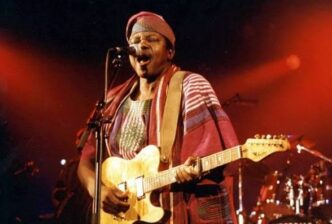
With his Fender Telecaster strapped around him, he led synchronised choreography involving his large ensemble, creating a performance template that has influenced the staging of contemporary Nigerian music.
His interlocking percussion arrangements and extended instrumental sessions also demonstrated the possibilities of layered African rhythms long before digital music production became dominant.
KSA’s influence has extended beyond Nigeria. Adekunle Gold and Flavour have been associated with the use of the groove from his 1982 classic “Ma Jaiye Oni” in their song “Yoyo.”
American rapper Petey Pablo also sampled the rhythm of KSA’s “Syncro System” for his 2001 track “I Told Y’all,” produced by Timbaland.
Anthems that defined an era
King Sunny Ade’s extensive catalogue contains songs that have become part of the soundtrack of several generations.
“Ja Funmi”, released in 1982, became one of his international breakthrough records after its release through Island Records. The song combined a message of prayer and protection with an infectious dance rhythm.
A year later, “Synchro System” further established KSA on the international stage. The fast-paced Jùjú record earned a Grammy nomination and demonstrated the global appeal of Yoruba lyrics and intricate African rhythms.
His 1982 classic “Ma Jaiye Oni” became another enduring favourite, capturing the celebratory spirit of its era with its relaxed tempo and danceable groove.
Earlier, “Ariya,” released in 1976, had already established KSA as a major force in Jùjú music and became a staple of social events and live entertainment.
Is KSA the last Jùjú king?
As King Sunny Ade enters his ninth decade, his milestone also raises questions about the future of traditional Jùjú music.
Unlike contemporary Afrobeats, which largely operates within short song formats, digital production and streaming platforms, classic Jùjú is built around extended live performances, large ensembles, guitar improvisation and Yoruba poetic praise-singing.
The passing and retirement of several older-generation musicians have also left a significant gap in the traditional Jùjú scene.
While younger musicians have incorporated elements of Jùjú into contemporary and hybrid sounds, few have attempted to build careers around the expansive traditional format on the scale achieved by KSA.
The economics of maintaining and touring with a large live band in the streaming era has also encouraged many younger musicians to adopt electronic production and hybrid styles.
Whether another musician eventually emerges to carry the Jùjú tradition forward in a similar way remains to be seen.
But after six decades at the centre of Nigerian music, King Sunny Ade’s influence remains firmly established, and his catalogue continues to resonate across generations.