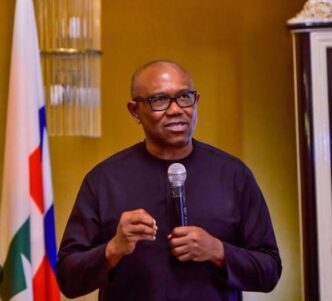
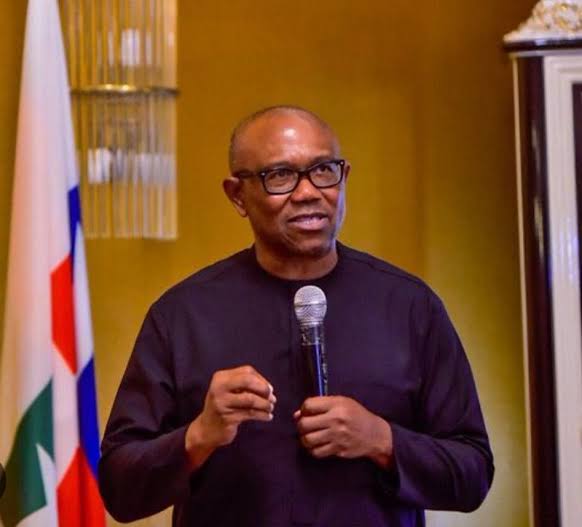
Former Anambra State governor and Labour Party presidential candidate in the 2023 election, Peter Obi, has confirmed his intention to contest the 2027 presidential election, striking a cautious and reflective tone as he called for unity, humility and national renewal.
Gatekeepers News reports that “Yes, I will be on the ballot in 2027,” Obi said during an extended interaction on X (formerly Twitter) Spaces. “But I am not God. Tomorrow is not guaranteed.”
The remark set the tone for a wide-ranging conversation in which Obi combined personal reflection with policy positions, presenting his political ambition less as a quest for power and more as a continuation of his belief that Nigeria can still function if leadership is anchored on competence, integrity and compassion.
Obi stressed that he was not desperate for office, warning supporters against insults, aggression and political hostility in his name.
“I am not desperate to be president. I am desperate to see Nigeria work,” he said, adding that arrogance, name-calling and intimidation only deepen national divisions.
Describing his personal life as modest and stable, Obi said public criticism no longer unsettles him. What worries him, he noted, is Nigeria’s worsening insecurity and declining national confidence.
“What should worry us is that people can no longer travel freely across this country,” he said, recalling a period when Nigerians could move across regions without fear, attend trade fairs nationwide and book hotels years in advance.
Pointing to his record in office as his primary credential, Obi challenged critics to identify any instance of personal enrichment during his tenure as governor. He recalled leaving savings of $150 million for Anambra State at the end of his administration.
“I didn’t leave one million dollars. I left 150 million dollars,” he said, adding that the current value of the funds would surprise many Nigerians if they had remained intact.
He cited several examples of personal restraint in public office, including declining luxury vehicles both as a bank chairman and as governor, choosing instead to channel resources into strengthening state institutions.
During his first four years as governor, Obi said he drove a Peugeot 406 while ensuring that judges, magistrates and senior civil servants — some of whom previously commuted on motorcycles — were provided official vehicles.
“These things are not pretence,” he said. “This is how I live.”
He also recounted reallocating land initially assigned to him to a retiring civil servant who had spent 35 years in service without owning a home, describing the gesture as symbolic of the values Nigeria urgently needs.
Coalitions With Conditions
On opposition alliances ahead of 2027, Obi said he would only participate in coalitions driven by public interest rather than personal ambition.
“I will only be part of a coalition that is committed to forming a government that will serve the people and change the narrative of Nigeria,” he said, adding that he had prayed not to be drawn into power arrangements lacking moral purpose.
“If a coalition is not for the people, I will not be part of it,” he added.
He rejected allegations of ethnic or religious bias, citing his record of cross-regional collaboration in both public service and the private sector.
According to him, all commissioners of police who served during his tenure as Anambra governor were from Northern states, including Kano, Taraba and Adamawa. He added that his aides and professional teams were drawn from across the federation.
“My ADC as governor was from Kano. My wife is from Akwa Ibom. I have worked with Nigerians from everywhere,” he said.
Obi warned that those who exploit ethnic and religious divisions do so out of fear of unity, stressing that poverty and insecurity affect Nigerians regardless of region or faith.
On economic policy, he reiterated his opposition to taxation policies that ignore productivity and widespread hardship.
“We cannot tax poverty. Tax is a function of productivity,” he said. “You cannot withdraw from an account where nothing was deposited.”
With more than 130 million Nigerians living in poverty and millions of young people unemployed, Obi argued that job creation and economic expansion must precede aggressive taxation.
Clarifying controversies around past elections, Obi said supporting a candidate does not amount to running their campaign, stressing that candidates are ultimately responsible for their own strategies.
“When it is my campaign, I do it my way,” he said, contrasting this with his extensive nationwide engagement during the 2023 presidential race.
He also dismissed claims that his administration ever ordered anyone to leave Anambra State, describing allegations of tribalism during his tenure as false.
Despite confirming his intention to run in 2027, Obi repeatedly returned to the themes of uncertainty and humility.
“I am not God,” he said. “Tomorrow is not guaranteed.”
He appealed for prayers, discipline and responsible support, warning against celebrating arrogance and hostility as political strength.
“Nigerians must stop celebrating arrogance and bad behaviour as strength,” Obi said. “What we need is competence, compassion, commitment and character.”
As the 2027 contest gradually takes shape, Obi’s message stood out less for certainty of victory than for its insistence that Nigeria’s future depends not on any single candidate, but on whether the country chooses unity, hard work and ethical leadership over division and hostility.