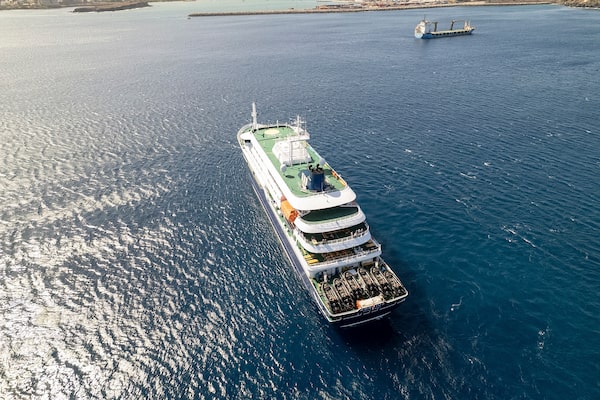
Three people have died and a British national is critically ill following a suspected hantavirus outbreak aboard a cruise ship in the Atlantic Ocean.
Gatekeepers News reports that tour operator Oceanwide Expeditions confirmed that a Dutch couple and a German passenger had died on its vessel, MV Hondius, although the exact causes of death have yet to be established.
The company said hantavirus has, however, been confirmed in a 69-year-old British passenger who is currently in intensive care in Johannesburg, South Africa.
Hantavirus is typically transmitted to humans through contact with infected rodents’ urine, saliva, or faeces. It can lead to severe respiratory illness, though person-to-person transmission is rare.
The MV Hondius, which is carrying 149 people, is currently anchored off Cape Verde. Two crew members — one British and one Dutch — are also reported to have acute respiratory symptoms, with one case described as severe. Both require urgent medical attention, although hantavirus has not yet been confirmed in either case.
The World Health Organization (WHO) said it had identified seven hantavirus cases as of May 4, including two laboratory-confirmed infections and five suspected cases.
Oceanwide Expeditions described the situation as “a serious medical situation” and said discussions were ongoing with local authorities.
According to the company, the first passenger fell ill and died on April 11 while still onboard. His cause of death remains undetermined. His body was removed when the ship docked at St Helena on April 24. His wife, who also disembarked there, later became ill during the return journey and died.
“At this time, it has not been confirmed that these two deaths are connected to the current medical situation on board,” the company said.
On April 27, the British passenger became seriously ill and was medically evacuated to South Africa. He remains in a “critical but stable condition” after testing positive for a hantavirus variant.
A third passenger, a German national, died onboard on Saturday. The cause of death has not yet been confirmed.
South Africa’s health minister, Aaron Motsoaledi, said the British patient was receiving care at a private facility.
“He’s being taken care of. As you know, hantavirus, like all viruses, don’t have any specific treatment, so they are giving symptomatic treatment and support as much as they could,” he said.
Motsoaledi added that contact tracing and testing would be carried out for those who had interacted with the patient.
A UK government spokesperson said consular teams were supporting the man’s family across the UK, South Africa, Spain, and Portugal.
Oceanwide Expeditions said investigations into the deaths were ongoing, noting that disembarkation, medical evacuations, and screening require coordination with local health authorities.
“Local health authorities have visited the vessel and assessed the situation. The medical transfer of the two ill persons on board has not yet taken place,” the company said.
It added that the ship may sail to Las Palmas or Tenerife, where passengers could disembark and undergo further medical screening.
The WHO said it was “acting with urgency” to support the situation and emphasised that the broader public risk remains low.
“Hantavirus infections are uncommon and usually linked to exposure to infected rodents,” said WHO regional director for Europe, Hans Henri P Kluge.
“While severe in some cases, it is not easily transmitted between people. The risk to the wider public remains low. There is no need for panic or travel restrictions,” he added.
The vessel had departed from Ushuaia, Argentina, about three weeks ago and completed its journey to Cape Verde, where it is now anchored off Praia.
A passenger onboard, who asked not to be named, said a medical evacuation was being arranged.
“The latest word is that a plane is on its way and once it gets here three people will be evacuated from the ship and flown straight to Europe,” the passenger said.
“Only one person has been tested (the one now in South Africa) and he tested positive for hantavirus. So, we don’t actually know yet if the other cases are that or something unrelated.”
The passenger added that the situation remains unclear.
“If they are all hantavirus then the transmission is a bit mysterious. We’ve been informed that there are no rodents on board, and person-to-person transmission is difficult/rare.”
Cape Verde authorities have reportedly barred passengers from disembarking in order to protect the local population.
Oceanwide Expeditions said strict precautionary measures, including isolation protocols, hygiene controls, and ongoing medical monitoring, had been implemented onboard.
“All passengers have been informed and are being supported,” the company said.
Microbiologist Siouxsie Wiles noted that hantavirus has an incubation period of one to eight weeks.
“With this incubation period are we going to see more people coming down with the disease in the next days and weeks?” she said.