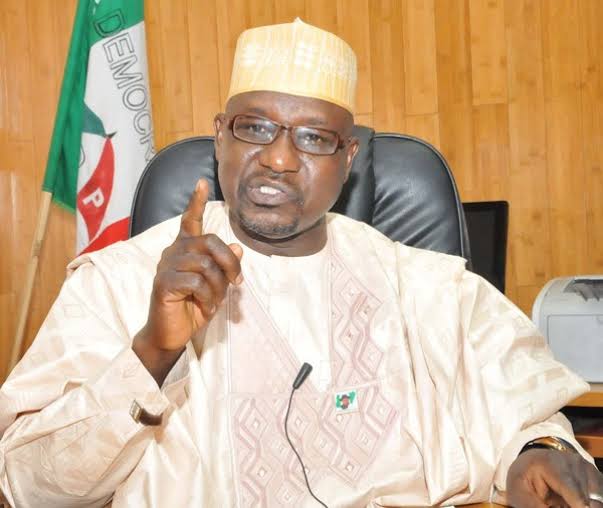
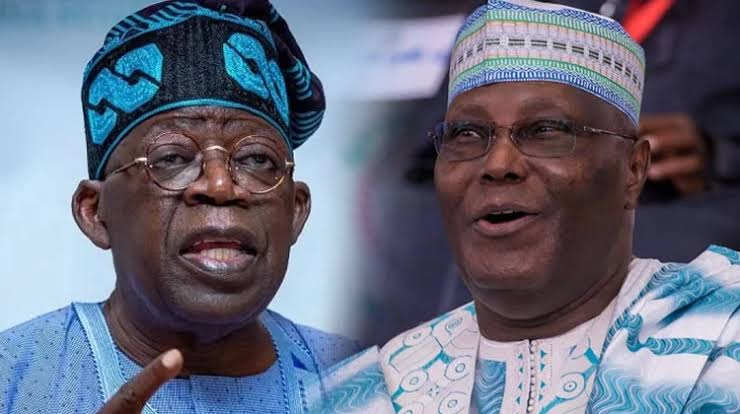
The African Democratic Congress has expressed confidence that its presidential candidate, Atiku Abubakar, can defeat the ruling All Progressives Congress in the 2027 general elections without relying on an opposition coalition.
Gatekeepers News reports that the ADC National Publicity Secretary, Bolaji Abdullahi, stated this during an appearance on Channels Television’s Politics Today, while explaining the party’s position following the breakdown of the opposition coalition proposed ahead of the 2027 elections.
Abdullahi acknowledged that the departure of some key figures had altered the political dynamics but insisted that the ADC remained confident in its ability to contest the election independently.
**“Now, one of the key leaders in the coalition has gone to the NDC (Nigeria Democratic Congress), that is, His Excellency Peter Obi and, of course, Rabiu Kwankwaso as his running mate. We are in the African Democratic Congress.
“What I am saying is that we don’t need a coalition to win this election. The African Democratic Congress does not need a coalition to win this election. If we are able to do the kind of coalition that we started, it will make our job easier, but we don’t necessarily need the coalition to win the election,”** Abdullahi said.
He explained that the coalition was initially conceived to make it easier for the opposition to defeat the APC but admitted that the arrangement had not developed as anticipated.
“When we started building this coalition, we started on an assumption that if we were able to build a broad-based coalition, it would make our job of beating the APC easy. That didn’t pan out the way we expected,” he said.
‘Single-handed victory’
Atiku, a former vice president, has contested the presidency several times and is running for the 2027 election with former Rivers State governor Rotimi Amaechi as his running mate.
His campaign has focused on an economic rescue plan, electoral reforms and opposition unity. His proposed economic measures include the immediate restoration of petrol subsidies, followed by their gradual removal after adequate social safety nets are established, alongside the rehabilitation of local refineries, stabilisation of the naira and efforts to tackle corruption in the subsidy system.
Asked whether Atiku could lead the ADC to victory without the opposition coalition, Abdullahi expressed confidence in the former vice president’s chances.
“I believe so, and that’s our thinking, and that’s what we are working with,” he said.
The ADC spokesman, however, disclosed that discussions among opposition parties were still ongoing, although the focus had shifted from producing a single presidential candidate to identifying areas of cooperation.
**“We are still having conversations among ourselves, opposition political parties. You’ve heard about the G100; they are mobilising everyone. We are still trying to bring everyone together, but the conversation is not about how we produce a single presidential candidate.
“The conversation predominantly is about what areas of cooperation are possible,”** he said.
Opposition realignment ahead of 2027
Abdullahi’s comments come amid continuing efforts by opposition parties and political actors to forge alliances ahead of the 2027 presidential election.
In the 2023 presidential election, APC candidate Bola Tinubu emerged victorious with more than eight million votes, defeating Atiku and Peter Obi, who each secured more than six million votes.
Two years after the election, the ADC emerged as the umbrella platform for a proposed opposition coalition, bringing together prominent political figures and groups seeking to challenge the APC in 2027.
Amid the opposition realignment, President Tinubu said he was not intimidated by opposition coalitions, maintaining that his administration remained focused on its economic and institutional reforms.
The proposed alliance subsequently faced internal disagreements, leadership disputes and legal challenges, resulting in a realignment of political forces.
Key figures, including Obi and Rabiu Kwankwaso, later defected to the NDC in May and emerged as the party’s presidential candidate and running mate respectively.
The 2027 presidential contest is therefore shaping up along familiar lines, with Tinubu expected to fly the APC flag, Atiku representing the ADC and Obi contesting under the NDC.
The official campaign season for presidential and National Assembly candidates opened on Wednesday, August 19.
According to the Independent National Electoral Commission’s timetable, the 2027 general elections will commence on January 16, 2027, with the presidential and National Assembly elections.
The final voter register is scheduled for release on January 11, while campaigns are expected to end on February 18. Any presidential or governorship run-offs are scheduled for February 28, with governorship and state House of Assembly elections set for March 6.