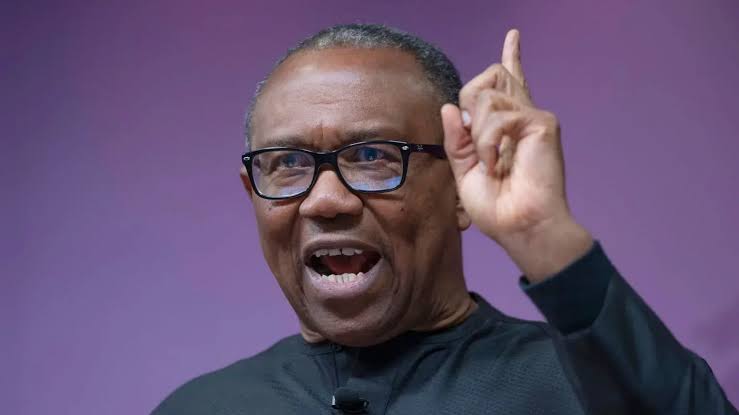


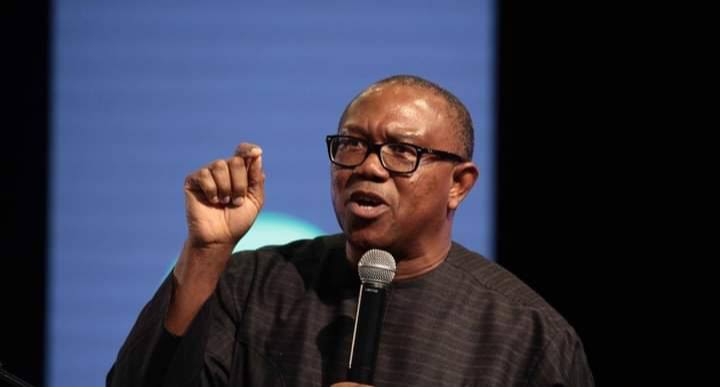
Peter Obi, former governor of Anambra State and presidential candidate of the Nigeria Democratic Congress (NDC), has dismissed claims that he left the state with $123.77 million in debt, saying he left more than $150 million in funds that could have covered the alleged obligation.
Gatekeepers News reports that Obi spoke on Thursday during an interview with Arise News while responding to claims by the Anambra State Government that his administration left eight external borrowing facilities worth $123.77 million when he left office in March 2014. The state government said the outstanding balance of the loans stood at N127.4 billion, equivalent to about $92.35 million, as of June 30, 2026.
The loans, according to the state government, were obtained for projects covering malaria control, education, healthcare, erosion management, community development and agricultural value-chain development.
Obi, however, said the funds being described as debts were not loans he personally obtained from banks.
“I told you these are not loans. I didn’t go to the bank,” Obi said.
He said the dollar component of the funds he left in investments was more than $150 million and generated income for the state.
“As at the time I left office, the dollar components of my savings invested in various bonds were over $150 million, which gives Anambra state guaranteed income of about $10 million yearly,” he said.
Obi said even if the state’s $123.7 million debt claim were accepted, the funds he left would have been sufficient to settle the obligation.
“Let me assume the worst-case scenario — which is false — that there was $123.7 million owed as of the time I left. I left over $150 million that was earning about $10 million,” he said.
“If they just kept the money that I left and were using the income to pay the loan, they would have finished paying it now, with the capital of $150 million still remaining, and still giving Anambra state $10 million annually.”
The former governor also disputed the way the alleged debt was being presented, arguing that the World Bank and other multilateral facilities were concessionary support facilitated by the Federal Government rather than conventional loans obtained directly by his administration.
“They (federal government) selected Anambra, Ekiti and Bauchi because these three states were doing well in education and said: why don’t we give them concessionary multilateral support to help them do better? It was a decision made by the federal government and the World Bank to give support,” Obi said.
In the Arise interview, Obi maintained that he did not approach any financial institution to borrow money or issue bonds during his eight years as governor.
“Let me categorically state again: I, Mr. Peter Obi, did not approach any financial institution to borrow money or issue bonds on behalf of Anambra State in the eight years that I was in government,” he said.
He also said the state did not owe salaries, gratuities, pensions or verified payments to contractors when he left office.
“On the day I left office, the government of Anambra State, which I served, was not owing any salary, gratuity, or pension to those scheduled to be paid by the state government. We were not owing any contractor or supplier who had executed their job, certified, and verified—not one. That is the way it is the day I left office,” Obi said.
Obi further said Anambra’s foreign debt was about $18 million when he assumed office and stood at about $30 million when he left in March 2014. He added that the figure had risen to $45 million by December 2014, nine months after his departure.
He also rejected the presentation of the World Bank and International Fund for Agricultural Development (IFAD) facilities as debts directly contracted by his administration.
“On these issues where World Bank and IFAD loans were listed in documents, the way it is presented is wrong public accounting,” he said.
“First, those were concessionary development support obtained by the Federal Government of Nigeria and on-lent to state governments that qualified or that they wanted to support with certain projects. These are concessionary facilities payable over a period of 25 to 35 years.”
The former governor said he left Anambra in a strong financial position, with more than $150 million in funds.
“The day I left Anambra State as governor, I left it in a very strong financial standing that no other state in Nigeria—and I repeat, show me any governor since the inception of this country who left over $150 million in funds,” he said.
“I left it in a financial standing that if they followed what I left, today they would have paid off the foreign debt and had at least $240 million left, earning a minimum of $20 million for the state every year.”
Obi also referred to his handover documents, saying they contained details of the cash, investments and foreign-currency holdings he left for his successor, including bank statements supporting the $150 million figure.
“This is my handover document. If you go there, you will see how much I left in Naira, in investments, in cash, and the foreign currency component backed with statements. I backed up all the foreign components with bank statements, showing where the $150 million was deposited, how the bonds were issued, and everything. It is not in question,” he said.
The dispute followed the Anambra government’s release of details of what it described as external debts inherited from Obi’s administration. Commissioner for Information and Value Reorientation, Law Mefor, said eight external borrowing facilities remained from Obi’s tenure and that the state had continued to make repayments.
Obi has continued to dispute the government’s account, insisting that the loans were not debts personally contracted by him and that he left sufficient funds and investments for the state.