



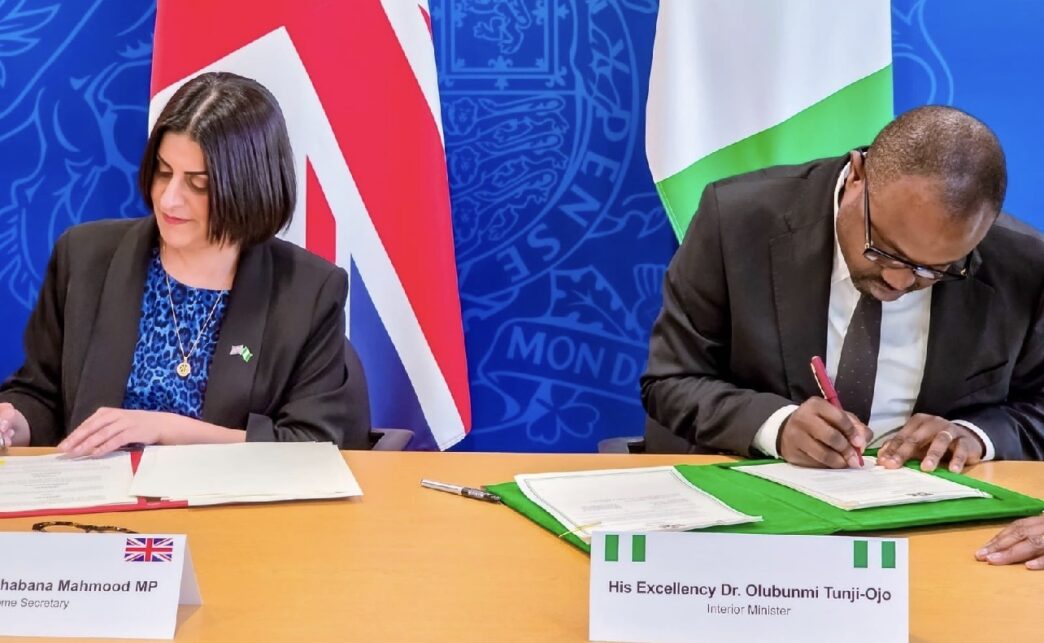
Nigeria and the United Kingdom have reached a new bilateral agreement designed to make it easier for the UK to return individuals with no legal right to remain, including failed asylum seekers, visa overstayers, and foreign national offenders, to Nigeria.
Gatekeepers News reports that the pact was signed on 19 March 2026 during the state visit of President Bola Ahmed Tinubu to the UK, marking a significant development in cooperation on migration control between the two countries.
The agreement was formalised by Nigeria’s Minister of Interior, Olubunmi Tunji‑Ojo, and the UK Home Secretary, Shabana Mahmood. Under its terms, British authorities will be able to more swiftly remove Nigerian nationals who have exhausted all legal appeals against deportation, have overstayed their visas, or have been convicted of crimes in the UK and are awaiting removal.
A major practical change introduced by the deal is that Nigeria will now accept UK‑issued identity letters, documents used when deportees do not hold valid passports, as sufficient identification for return. Previously, Nigeria relied on emergency travel documents, which often delayed deportation processes. This new recognition removes a significant administrative hurdle that has historically slowed down removals.
The UK government emphasised that the agreement aligns with its broader efforts to strengthen its immigration system and uphold border controls. Officials from the UK Home Office stated that the partnership with Nigeria will help ensure individuals who abuse. the UK’s immigration system, violate laws, or otherwise lack the right to stay will be removed more efficiently.
From Nigeria’s perspective, the agreement was presented as a demonstration of Abuja’s commitment to fulfilling international obligations responsibly. Minister Tunji‑Ojo highlighted that Nigeria’s willingness to cooperate reflects a commitment to fairness and mutual respect in bilateral relations.
While both governments have lauded the deal, some key specifics remain unclear. The precise start date and duration of the agreement have not been publicly disclosed, nor have details about whether financial incentives are involved. It is also yet to be confirmed whether deportations under this framework will apply strictly to Nigerian nationals or potentially include individuals of other nationalities held in the UK.
Reports indicate that nearly 961 Nigerian failed asylum seekers in the UK have exhausted their appeal rights, and approximately 1,110 Nigerian nationals with criminal convictions are awaiting deportation. Should the agreement be implemented in full, these cases could move more rapidly through the deportation process.
The pact comes at a time when migration and asylum policies remain contentious issues in the UK, following the collapse of previous approaches such as the UK–Rwanda plan.
For Nigeria, the agreement reflects deepening engagement with the UK on security, migration, and other bilateral priorities during President Tinubu’s high‑profile visit.