United States and Iran have announced an agreement aimed at ending the conflict that has engulfed the Middle East for months and reopening the strategically important Strait of Hormuz, raising hopes of regional stability and economic recovery.
Gatekeepers News reports that the US and mediator Pakistan said the agreement is expected to be formally signed in Switzerland on Friday. The announcement was welcomed by Saudi Arabia and other regional powers, while many Iranians expressed optimism that it could bring an end to months of violence and uncertainty.
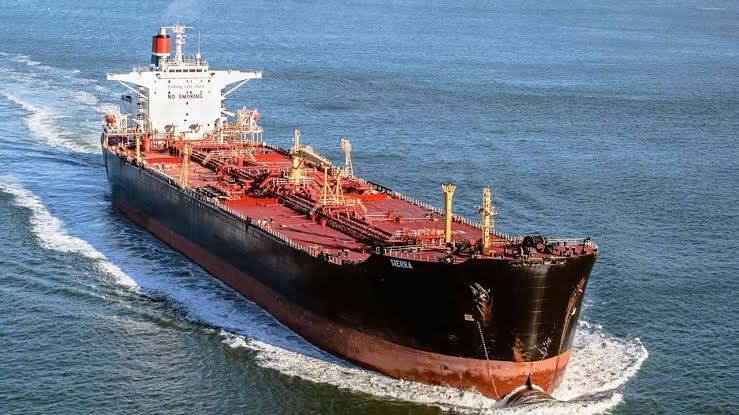
Although full details of the agreement have yet to be disclosed, US President Donald Trump confirmed that the Strait of Hormuz, a vital route for global oil shipments that Iran had blockaded since the outbreak of the conflict, would be reopened.
“The Deal with the Islamic Republic of Iran is now complete. Ships of the World, start your engines. Let the oil flow!” Trump said on Sunday.
Iran’s Deputy Foreign Minister, Kazem Gharibabadi, described the agreement as bringing an “immediate end” to the war and said both sides would begin talks within two months toward a permanent settlement.
Iran’s military also welcomed the development, claiming the agreement demonstrated that it had “humiliated” the United States and Israel during the conflict, which began on February 28 following a major campaign of airstrikes.
Despite the announcement, Israel signalled that its military presence in neighbouring territories would continue.
“Prime Minister Benjamin Netanyahu and I are pursuing a clear policy under which the IDF will remain in the security zones in Lebanon, Syria and Gaza for an unlimited period of time, in order to protect the border and Israeli communities from there against jihadist elements,” Israeli Defence Minister Israel Katz said on Monday.
An official source told AFP that Lebanese authorities had not yet been briefed on the details of the agreement.
The deal follows weeks of tense negotiations and repeated warnings of renewed hostilities, although several aspects of the arrangement remain unclear.
Iran’s Mehr news agency reported that the United States would release $12 billion in frozen Iranian assets before negotiations begin. The agency also cited a 14-point memorandum of understanding that allegedly provides for the release of up to $24 billion in frozen assets during a 60-day negotiation period following the signing of the agreement.
The Trump administration has not publicly commented on those details, particularly as negotiations continue over Iran’s nuclear programme and stockpile of highly enriched uranium.
In an interview with The New York Times, Trump said discussions were ongoing over whether Iran would suspend uranium enrichment for 20 years. He suggested a 15-year suspension could be considered but declined to negotiate publicly.
A diplomat also disclosed that the United States and Iran are expected to hold indirect talks in Doha ahead of the formal signing ceremony.
The announcement drew positive reactions from across the international community. United Nations Secretary-General Antonio Guterres described the agreement as a “critical step” toward ending the conflict.
Among ordinary Iranians, the prospect of peace was met with cautious optimism.
“Once the war is over and the sanctions we had are lifted, I think it will be very good and I will be happy,” said Nastaran, a 29-year-old software engineer in Tehran.
Saudi Arabia welcomed the agreement, saying a lasting settlement must take into account the security interests of regional states. Egypt described it as a potential “turning point,” while Pakistan’s Prime Minister Shehbaz Sharif called it a “historic step towards peace.”
The United Kingdom, France, Germany and Italy also expressed readiness to lift sanctions on Iran and pledged to work with all parties to secure a long-term diplomatic resolution.
Financial markets reacted positively to the development, with oil prices falling by nearly five percent at the opening of trading on Monday as investors anticipated the reopening of the Strait of Hormuz.
US Vice President JD Vance said the agreement could have far-reaching economic benefits.
“What we’re going to be able to do is drive down the cost of energy, not just now but for the long term, and create a real engine of prosperity in the Middle East,” Vance told Fox News.
He added that he expects to attend the signing ceremony in Geneva and said President Trump could also be present.