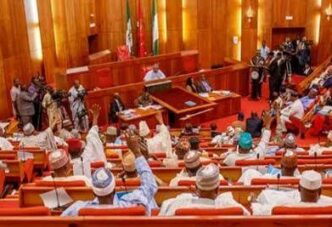
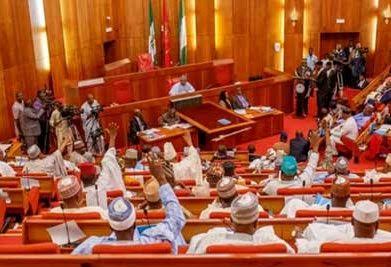
The Senate has recommended budgetary and other sanctions against ministries, departments and agencies (MDAs) that fail to implement its resolutions, citing persistent disregard for legislative directives by several government institutions.
Gatekeepers News reports that the recommendation followed the presentation and adoption of the report of the Senate Committee on Legislative Compliance, which reviewed the implementation of Senate resolutions issued between July 2023 and December 2025.
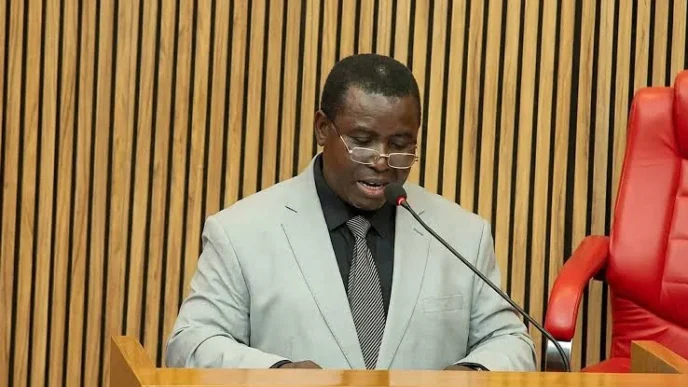
Presenting the report during Wednesday’s plenary, the committee’s chairman, Sen. Garba Maidoki, said the panel examined 27 referrals arising from Senate motions and committee reports during the period.
According to Maidoki, the committee found that many Senate resolutions were either delayed or ignored outright, with several MDAs failing to provide compliance reports despite repeated requests.
“The implementation of Senate resolutions is often delayed and sometimes ignored,” he said.
He noted that while the executive has the responsibility of issuing directives to implement Senate resolutions, many agencies failed to respond to the committee’s requests for compliance updates, thereby weakening the National Assembly’s oversight function.
Maidoki said some agencies cited the exclusion of projects from annual budgets as the reason for failing to implement Senate resolutions on road rehabilitation and disaster management.
He also highlighted the unresolved case of Eromonsele Omhonria, a child allegedly shot in the eye by an officer of the National Drug Law Enforcement Agency (NDLEA), saying the agency had yet to secure funding for the child’s medical treatment abroad.
“The attorney-general and the office of the minister of finance have not been able to make any headway in retrieving this compensation,” Maidoki said.
The committee further criticised the failure of some government agencies to comply with Senate resolutions directing the reinstatement of disengaged workers.
Maidoki cited the Nigerian Railway Corporation’s refusal to reinstate former employee Engr. Paddy Ukpe despite repeated interventions by the committee.
“Most of these MDAs, when they conclude their assignment, refer the final recommendation to the head of service. Unfortunately, none of the recommendations sent to the head of service has ever received a response,” he said.
He added that similar compliance issues had also been recorded with the Nigerian Army regarding the reinstatement of some officers.
The committee observed that some agencies lacked the statutory authority to implement certain Senate resolutions, while others were constrained by inadequate funding. It also noted that some motions contained multiple recommendations, making implementation more difficult.
Committee proposes sanctions
To improve compliance, the committee recommended that budgetary and other sanctions be imposed on MDAs that fail to implement or respond to Senate resolutions.
The affected institutions include the Federal Ministries of Works; Health; Power; Petroleum Resources; Humanitarian Affairs and Poverty Reduction; Information; Environment; and Solid Minerals Development, as well as the Department of State Services (DSS), Nigeria Centre for Disease Control (NCDC), Federal Inland Revenue Service (FIRS), Federal Roads Maintenance Agency (FERMA), Ecological Fund Office, Nigerian Railway Corporation, National Drug Law Enforcement Agency (NDLEA), Federal Civil Service Commission, and the Office of the Head of the Civil Service of the Federation.
The committee also recommended that Senate resolutions delayed due to funding constraints should automatically be incorporated into the following year’s budget through the Senate Committee on Appropriations.
It advised MDAs facing financial challenges to channel funding requests through the Secretary to the Government of the Federation (SGF).
In addition, the committee urged the executive to direct the NDLEA to explore alternative funding sources for Omhonria’s overseas medical treatment and called on the SGF to ensure the Nigerian Railway Corporation and other affected agencies comply with Senate directives on the reinstatement of disengaged workers and payment of their entitlements.
The Senate adopted all the committee’s recommendations.
Speaking after the report’s adoption, Senate President Godswill Akpabio described it as unprecedented, noting that it was the first comprehensive legislative compliance report presented to the upper chamber since the return to democratic rule in 1999.
“The committee on legislative compliance since 1999 has never submitted this kind of report,” Akpabio said.
He urged lawmakers to study the report carefully and use its findings to strengthen legislative oversight and improve compliance with Senate resolutions across government institutions.