



President Bola Tinubu has urged African governments to prioritise sustained investment in science, research and innovation, describing them as the continent’s most effective tools for addressing food insecurity, climate change and low agricultural productivity.
Gatekeepers News reports that the President made the call on Monday while declaring open the 9th Africa Agriculture Science Week (AASW) and the 10th General Assembly of the Forum for Agricultural Research in Africa (FARA) in Abuja. His remarks came as a new report by AKADEMIYA2063 revealed that Africa spent a record $122.9 billion on agricultural imports in 2022, underscoring the continent’s continued struggle to harness its agricultural potential for food security and economic growth.
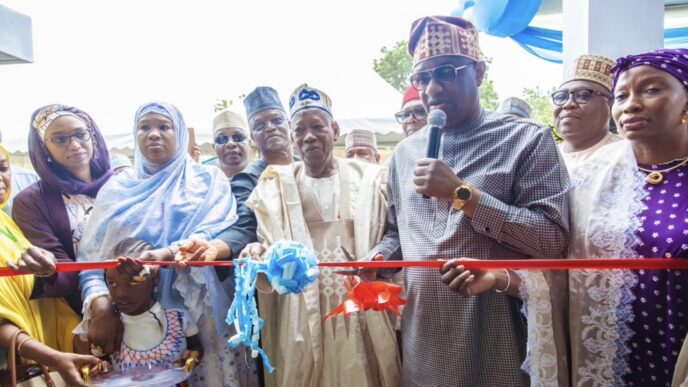
Represented by the Minister of Agriculture and Food Security, Senator Abubakar Kyari, Tinubu said Africa’s agricultural future would be determined not by the abundance of its natural resources but by the strength of its scientific institutions and commitment to knowledge-driven development.
“Before countries became prosperous, they first learned how to feed their people; and before they transformed agriculture, they invested in science,” the President said.
He noted that while Africa is endowed with vast arable land, rich biodiversity and one of the world’s youngest populations, those advantages would remain largely untapped unless converted into innovation, enterprise and economic opportunities.
Describing the Africa Agriculture Science Week as more than a scientific gathering, Tinubu said it had evolved into the continent’s leading platform for shaping agricultural policy, strengthening partnerships and advancing research capable of transforming Africa’s agrifood systems.
According to him, deliberations at the conference could redefine research priorities, accelerate innovation and help build a more food-secure, resilient and prosperous continent.
Tinubu reiterated that agriculture remains central to his administration’s Renewed Hope Agenda, stressing that food security is inseparable from national security, economic prosperity and social stability.
He said Nigeria’s agricultural transformation strategy goes beyond boosting food production to building a modern, competitive, climate-resilient and market-oriented agrifood system driven by science, technology, innovation and private sector investment.
The President highlighted ongoing reforms across the agricultural value chain, including expanded irrigation and all-season farming, increased mechanisation, improved access to quality seeds and fertilisers, expanded agricultural financing, digital agriculture and agro-industrial development.
He also reaffirmed the Federal Government’s commitment to strengthening agricultural research institutes, universities, extension services and strategic partnerships, insisting that lasting agricultural transformation must be supported by sound scientific evidence.
“The encouraging progress already being recorded across several priority value chains reinforces our confidence that consistent investment, effective implementation and strong institutions will continue to improve productivity, create jobs, strengthen rural livelihoods and enhance national food security,” he said.
Tinubu described science as the unseen force behind every successful agricultural revolution, noting that improved crop varieties, climate-smart farming, irrigation technologies and evidence-based policies are all products of sustained research.
He added that scientific research not only generates knowledge but also reduces uncertainty, boosts investor confidence, guides policymaking and equips farmers with technologies needed to adapt to increasingly unpredictable climatic conditions.
The President identified emerging technologies such as artificial intelligence, biotechnology, satellite applications, digital platforms and data science as transformative tools capable of reshaping African agriculture.
Rather than relying solely on imported technologies, he urged African nations to become global leaders in developing innovations tailored to the continent’s unique ecological conditions and production systems.
Tinubu also called for greater investment in agricultural research systems, universities, innovation hubs, digital infrastructure and scientific talent, while advocating stronger collaboration among governments, researchers, development partners, private investors and farmers.
He stressed that research should deliver practical solutions that improve productivity, create jobs, restore degraded land, strengthen climate resilience, enhance nutrition and drive economic growth, rather than ending as academic publications.
The President further argued that no African country could independently overcome challenges such as climate change, emerging pests and diseases, land degradation, food insecurity and market volatility, calling instead for coordinated scientific responses, shared investments and stronger continental partnerships.
He urged participants to ensure that ideas generated during the conference translate into practical technologies, improved public policies, profitable businesses for young people and higher incomes for farmers.
Reaffirming Nigeria’s commitment to working with African countries and international partners, Tinubu challenged the continent to move beyond being a consumer of agricultural technologies to becoming a globally recognised hub for agricultural knowledge, scientific excellence and innovation.
Delivering the keynote address, Managing Director of AKADEMIYA2063 and Public Policy, Innovation and Strategy Specialist, Dr. Debisi Araba, said Africa’s growing dependence on imported food despite possessing nearly two-thirds of the world’s uncultivated arable land reflected deep structural weaknesses affecting agricultural productivity, regional trade and economic resilience.
According to Araba, Africa’s agricultural import bill climbed to $122.9 billion in 2022 following disruptions caused by the Russia-Ukraine war, exposing the continent’s vulnerability to external shocks.
While intra-African agricultural trade has tripled over the past two decades and remained resilient during both the 2008 global financial crisis and the COVID-19 pandemic, he noted that it still accounts for less than 20 per cent of total agricultural trade, compared with more than 50 per cent in Asia.
He attributed the weak regional trade to restrictive sanitary and phytosanitary regulations and other non-tariff barriers, which he said impose costs equivalent to a 49 per cent tariff on agricultural products traded across African borders.
Araba said full implementation of the African Continental Free Trade Area (AfCFTA) and the removal of such barriers could increase intra-African agricultural trade by 29 per cent, strengthen regional value chains, improve food availability and reduce dependence on imports.
The agricultural economist warned that worsening food insecurity and rising unemployment are closely linked, revealing that 845 million Africans, representing 58 per cent of the continent’s population, are moderately or severely food insecure.
He added that 62 per cent of preschool-aged children suffer deficiencies in iron, zinc or vitamin A, highlighting the scale of Africa’s nutrition crisis.
Despite these challenges, agriculture remains Africa’s largest employer, accounting for 63 per cent of total employment, while about 72 million young Africans are neither in employment, education nor training.
“Hunger and jobs are the same agenda,” Araba said, stressing that transforming agriculture presents Africa’s greatest opportunity to reduce poverty, generate employment and improve food security.
He urged governments to invest more heavily in innovation, pointing to black soldier fly farming as an emerging industry capable of converting organic waste into high-value animal feed and fertiliser.
According to him, Africa generates about 99 million tonnes of suitable municipal bio-waste annually—enough to support an industry that could contribute $211 billion to the continent’s GDP each year, create 17 million full-time jobs, lift 22 million people out of poverty annually and replace 76 per cent of Africa’s soybean feed supply.
“That is what a frontier looks like when the institutions behind it work,” he said.
Araba also expressed concern over persistent underinvestment in agricultural research and development, revealing that 41 of 46 African countries spend below the African Union’s benchmark of one per cent of agricultural GDP on agricultural research.
He noted that agricultural growth across the continent continues to depend largely on expanding cultivated land instead of improving productivity.
According to him, cereal yield gaps remain between 40 and 60 per cent because of poor market access, weak extension services and inadequate enabling environments, despite the availability of improved technologies.
He added that Africa attracts only 1.6 per cent of global agri-tech investment, even though studies show that 76 per cent of digital agriculture initiatives increase farmers’ adoption of improved farming practices, while 68 per cent lead to higher crop yields.
Araba called on African governments to prioritise investment in research, innovation, institutional capacity and regional integration to achieve the Comprehensive Africa Agriculture Development Programme (CAADP) Kampala Declaration targets of increasing agricultural output by 45 per cent, tripling intra-African agrifood trade, halving post-harvest losses and ending hunger by 2035.
“A tractor imported is not mechanisation mastered. A cold room purchased is not a cold chain built. A digital platform launched is not adoption achieved,” he said, stressing that Africa’s agricultural transformation ultimately depends on building the knowledge, institutions and capabilities needed to scale innovation effectively.