


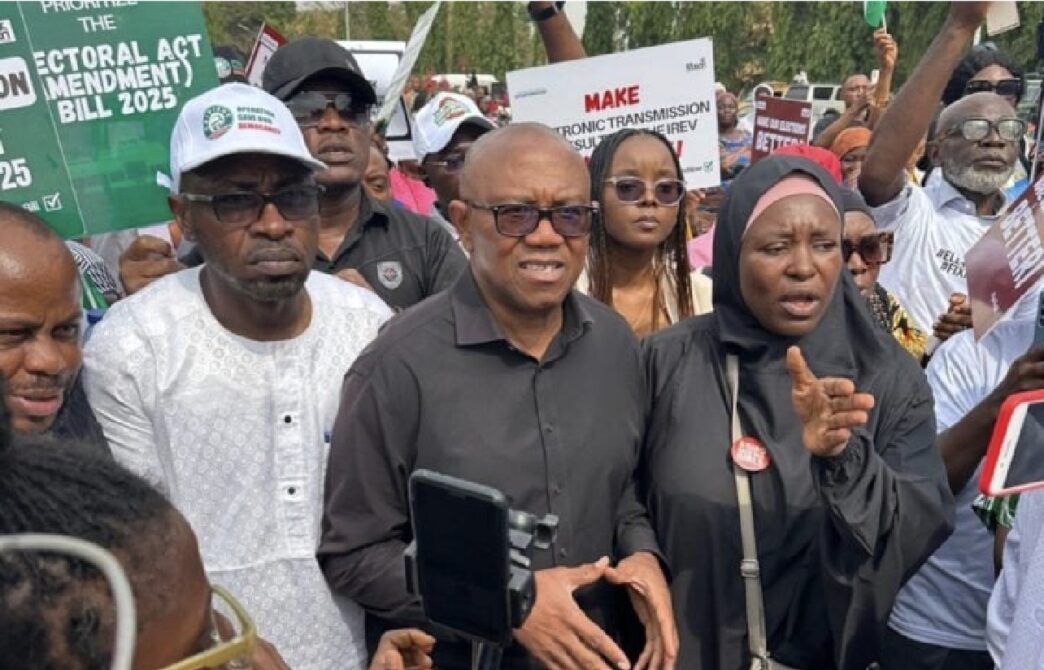
Peter Obi, the Labour Party’s presidential candidate in the 2023 general election, on Monday led a large crowd of protesters to National Assembly Complex in Abuja to challenge the Senate’s decision to reject real-time electronic transmission of election results.
Gatekeepers News reports that the protest drew participation from students, civil society organisations, members of the African Democratic Congress (ADC), and supporters of the Obidient Movement.
The demonstrators marched peacefully, chanting solidarity songs and carrying placards demanding transparency, credibility, and fairness in Nigeria’s electoral process.
Addressing the crowd, Obi urged lawmakers to allow elections to follow a clear, credible, and transparent process. He said Nigerians are ready to accept the outcome of any election conducted fairly and in line with democratic standards.
“Let the elections go through the normal and transparent process. Whoever wins, we will accept. So, why introduce confusion into the system?” Obi asked.
The protest followed widespread public anger after the Senate passed amendments to the Electoral Act on February 4, after a five-hour clause-by-clause consideration.
One of the key changes reduced the period within which the Independent National Electoral Commission (INEC) must publish notices of election from 360 days to 180 days.
More controversially, the Senate rejected a proposal that would have made real-time electronic transmission of polling unit results to the INEC Result Viewing Portal (IReV) compulsory. Instead, lawmakers retained the existing provision that allows INEC to determine the method and timing of electronic transmission.
The rejected amendment, contained in clause 60(3) of the bill, sought to mandate presiding officers to transmit election results electronically and in real time after signing and stamping the official result forms. Supporters of the proposal argued that it would strengthen transparency, reduce manipulation, and restore public confidence in elections.
However, the Senate opted to retain section 60(5) of the 2022 Electoral Act, which gives INEC the discretion to decide how and when results are transmitted.
This decision immediately triggered widespread criticism across social media and civil society platforms, with many Nigerians accusing lawmakers of attempting to weaken electoral accountability.
In response to the public backlash, the Senate scheduled an emergency plenary session for Tuesday, February 10, to reconsider the contentious provisions.