

The final whistle has been blown. The stadium lights have dimmed. The confetti has settled. Another FIFA World Cup has entered history, leaving behind moments that will be debated long after the players have retired.
Yet, beyond the goals, tactics, celebrations and disappointments, the tournament has reopened an older and deeper conversation about greatness, recognition and human nature.
Football has always been more than a game. It is a theatre where nations express identity, where heroes are created, where villains are imagined and where human emotions are displayed without restraint. The World Cup is perhaps the only sporting event where a single moment can transform a player into a legend or turn a champion into a target of criticism.
The latest tournament provided another chapter in the extraordinary story of Lionel Messi – a player whose career has already moved beyond football statistics into the realm of cultural history. Whether one admires him or questions him, one fact remains undeniable: Messi has forced the world to rethink the limits of individual achievement in football.
But perhaps the most fascinating aspect of Messi’sjourney is not only what he achieved.
It is the reaction his greatness produced.
The same player who inspired millions of children to pick up a football also became the subject of endless debates, accusations and attempts by some sections of football culture to diminish his achievements.
This is not a new human phenomenon.
Decades earlier, another global icon experienced the same contradiction.
His name was Michael Jackson.
Jackson conquered music.
Messi conquered football.
One moved millions through sound and movement.
The other moved millions through goals, imagination and impossible moments.
Both became symbols of excellence.
And both discovered the uncomfortable burden of becoming the best.
Michael Jackson: The Boy Who Became the Sound of the World
Before discussing controversy, one must first understand the mountain of achievement that Michael Jackson climbed.
History often remembers famous people through their struggles, but greatness must be understood before it is judged.
Michael Jackson was not simply a successful musician.
He was a cultural revolution.
Born in Gary, Indiana, in 1958, Jackson entered the entertainment world as a child with the Jackson 5. Yet even among talented siblings, his ability was immediately obvious. His voice, emotional expression and stage confidence appeared unusual for someone so young.
When the Jackson 5 released “I Want You Back” in 1969, the world encountered a child performer who possessed the charisma of an experienced entertainer. The song reached number one on the Billboard Hot 100 in January 1970, making the young Jackson one of the youngest vocalists ever to achieve such recognition.
But this was only the beginning.
The child star became the architect of a new form of global entertainment.
Thriller: The Moment Music Changed Forever
In 1982, Michael Jackson released Thriller.
Few moments in popular culture can compare with what followed.
The album was not merely successful; it became a worldwide cultural event.
It produced unforgettable songs:
•“Billie Jean”
•“Beat It”
•“Human Nature”
•“Wanna Be Startin’ Somethin’”
•“Thriller”
The album eventually became the best-selling album in history.
But numbers alone cannot explain Thriller.
The extraordinary fact about Thriller was that it changed what people expected from a musician.
Before Jackson, a singer was primarily heard.
After Jackson, a superstar was expected to be heard, seen and experienced.
He transformed the music video from a promotional tool into an art form.
The “Thriller” video was not simply a music video. It was a 14-minute cinematic production with choreography, storytelling, costumes and special effects. It blurred the boundary between Hollywood and popular music.
The world was witnessing something new.
Music journalist after music journalist struggled to describe the phenomenon because Jackson seemed to combine several professions into one person:
•singer;
•dancer;
•actor;
•choreographer;
•fashion icon;
•visual artist.
Quincy Jones, the legendary producer who worked with Jackson on Off the Wall, Thriller and Bad, once described Jackson’s dedication as extraordinary, noting that his success came from a combination of talent and relentless perfectionism.
Jackson was not simply gifted.
He was obsessed with excellence.
The Moonwalk: The Night Michael Jackson Appeared to Defy Physics
Perhaps no single performance captured Jackson’s genius more than his appearance at the Motown 25television special in 1983.
The world watched as Jackson performed “Billie Jean”.
Then came the moment.
The moonwalk.
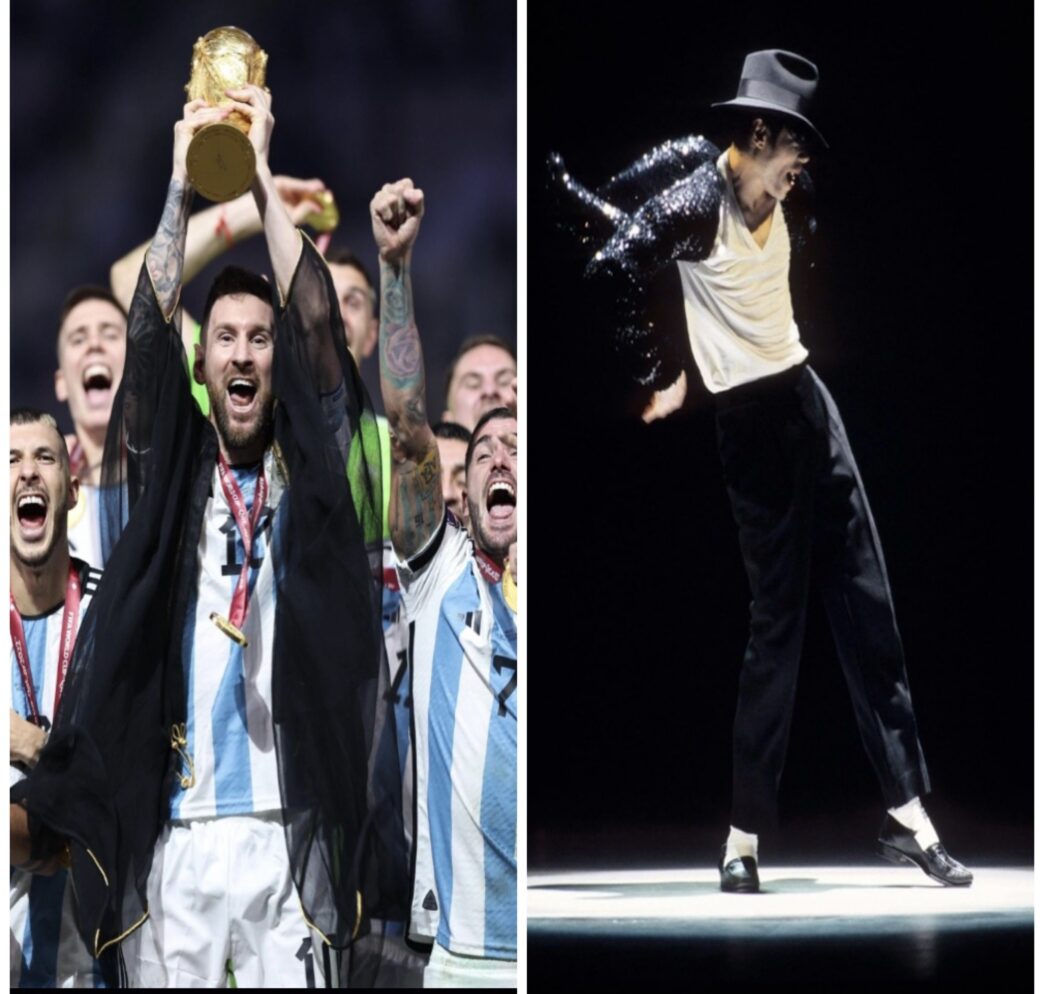
Millions of viewers saw a performer seemingly move backwards while appearing to glide forward. The movement itself was not invented by Jackson, but his execution transformed it into one of the most recognisable images of the twentieth century.
The black sequined jacket.
The single white glove.
The fedora.
The sudden pause.
The impossible movement.
It became more than a dance.
It became a cultural symbol.
Children across the world have continued to imitate it. Professional dancers study it. Future superstars borrowed from it.
Jackson had achieved something rare:
He created a movement that became part of human memory.
The Rare Truth about Michael Jackson’s Influence
Many discussions of Jackson focus only on music sales, but his greatest influence was changing the definition of the entertainer.
Before Jackson, singers performed songs.
After Jackson, performers were expected to create worlds.
His influence can be seen in:
•Beyoncé’s visual albums;
•Usher’s stage performances;
•Justin Timberlake’s choreography;
•Bruno Mars’ performance style;
•the modern expectation that pop stars must combine music with theatre.
Jackson also changed the relationship between Black artists and mainstream entertainment.
His success on MTV helped break barriers that had limited exposure for many African American performers.
He did not simply enter popular culture.
He changed its structure.
Lionel Messi: The Small Boy Who Rewrote Football History
If Michael Jackson transformed entertainment, Lionel Messi transformed football.
His story is almost fictional.
A small boy from Rosario, Argentina, diagnosed with a growth hormone deficiency, who left South America as a child and joined Barcelona’s famous La Masia academy became the player who would redefine football excellence.
Messi’s greatness was not built around one skill.
It was the combination:
•extraordinary dribbling;
•vision;
• precision free-kicks;
•defence-splitting passing;
•finishing;
•intelligence;
•composure;
•consistency.
Many players have possessed one or two of these qualities.
Messi possessed all of them simultaneously.
The Goal That Started the Maradona Debate
In April 2007, Messi scored one of the most remarkable goals in football history against Getafe.
Receiving the ball near midfield, he moved past defenders with astonishing balance and control before calmly finishing.
Immediately, comparisons began with Diego Maradona’s famous 1986 World Cup goal against England.
This comparison was extraordinary.
Maradona was not merely a footballer.
He was an Argentine national symbol.
For commentators to compare a young Messi with Maradona suggested that football history was witnessing something exceptional.
Messi Against the Giants of Europe
Messi’s greatness was not produced against weak opposition.
It was produced against the strongest teams in the world.
Against Real Madrid, he became one of the defining figures of El Clásico history.
Against Manchester United, he delivered unforgettable Champions League performances.
In the 2009 Champions League final, he scored a memorable headed goal against a Manchester United side considered among the strongest teams in Europe.
In the 2011 Champions League final at Wembley, Barcelona defeated Manchester United again, and Messi produced a performance many observers considered one of the greatest individual displays in a major final.
Against Arsenal in 2010, Messi scored four goals in one Champions League match.
These were not ordinary performances.
They were football moments that entered history.
The Numbers That Seemed Impossible
In 2012, Messi scored 91 goals in a calendar year.
For generations, football had produced legendary goalscorers:
•Pelé;
•Gerd Müller;
•Romário;
•Ronaldo Nazário.
Yet Messi reached a level that appeared almost impossible.
He did not simply break records.
He changed what people believed was possible.
His career eventually produced:
•eight Ballon d’Or awards;
•multiple Champions League triumphs;
•hundreds of assists;
•Barcelona’s all-time scoring record;
•Argentina’s greatest international achievements in decades.
But the greatest unfinished chapter was always the World Cup.
The World Cup, the Crown and the Controversy: Why Messi’s Greatest Triumph Did Not Silence His Critics
For more than a decade, Lionel Messi carried a burden that few athletes in history have experienced. He had conquered almost everything that football could offer, yet one question followed him like a shadow:
Could he truly be considered the greatest without winning the World Cup?
It was a strange question because, by almost every measurable standard, Messi had already produced a career beyond imagination. He had won domestic titles, European trophies, individual awards and broken records that had survived for decades. Yet football, perhaps more than any other sport, attaches enormous symbolic importance to the World Cup. The tournament is not merely a competition; it is a stage where national identity, history and individual destiny meet.
For Argentine supporters, the absence of a World Cup after 1986 created an emotional wound. Diego Maradona had carried Argentina to glory in Mexico, and every generation searched for the successor who could provide a similar moment. Messi reached two finals before eventually lifting the trophy, but each disappointment intensified the criticism.
The 2014 World Cup final in Brazil was especially painful. Argentina lost to Germany after Mario Götze’s extra-time goal, and although Messi won the Golden Ball as the tournament’s best player, some critics argued that his international legacy remained incomplete.
The criticism was often paradoxical.
A player who had carried Barcelona to historic achievements was accused of not doing enough for his country.
A player who had scored hundreds of goals was accused of lacking decisive moments.
A player who had created thousands of opportunities was accused of not being a leader.
The debate revealed something important about greatness: extraordinary individuals are often judged by standards that would be considered unreasonable for ordinary people.
Qatar 2022: The Moment History Finally Answered
The 2022 FIFA World Cup in Qatar became the defining chapter of Messi’s career.
At 35 years old, an age when many footballers begin their decline, Messi produced one of the greatest individual tournament performances in World Cup history.
He scored seven goals.
He provided three assists.
He scored in every knockout round.
He became the first player in World Cup history to score in the group stage, round of 16, quarter-final, semi-final and final in the same tournament.
But beyond statistics, Messi’s greatest achievement was emotional.
He became the leader of an Argentine team that seemed to reflect his personality: talented, disciplined and united.
The final against France became one of the greatest matches ever played in football history.
Argentina took a two-goal lead.
France responded.
Messi scored again in extra time.
Kylian Mbappé completed his hat-trick – becoming the first player to do so in a World Cup final and still lost.
The match went to penalties.
Argentina won.
The image of Messi lifting the World Cup trophy became one of the defining sporting images of the twenty-first century.
For many observers, the debate was over.
To FIFA, “THE COLLECTION IS COMPLETE”!
The missing piece had finally arrived.
Former players, coaches and journalists across the world described the victory as the completion of Messi’s historical journey.
The great Brazilian footballer Pelé had previously praised Messi’s talent, while many former players who had debated his place among football’s greatest acknowledged that the World Cup victory removed the final argument used against him.
However, something remarkable happened.
Even after achieving the one thing critics claimed he needed, criticism did not disappear.
It simply changed direction.
When Victory Was Still Not Enough
The reaction to Messi’s World Cup triumph provides one of the most interesting examples of how modern society debates greatness.
Instead of universal acceptance, new arguments emerged.
Some questioned refereeing decisions.
Others suggested FIFA favoured Argentina.
Some claimed that Messi had received excessive media protection.
Online petitions and campaigns emerged from sections of football supporters demanding extraordinary measures against Argentina, including calls to exclude the national team from future competitions. Although such campaigns did not represent mainstream football opinion, their existence demonstrated the intensity of opposition that Messi’s achievements generated among certain groups.
The question therefore becomes:
Why does a footballer’s success produce such strong emotional reactions?
Part of the answer lies in football identity.
Football supporters do not experience the sport as neutral observers. Clubs represent memories, communities and personal identities.
For supporters of teams that experienced painful defeats against Messi’s Barcelona, he was not simply an opponent. He was the face of an era of dominance.
For Real Madrid supporters, Messi represented Barcelona’s greatest modern rival.
For Manchester United supporters, his Champions League performances represented painful memories.
For Arsenal supporters, the 2010 Champions League quarter-final, when Messi scored four goals at Camp Nou, remained one of those nights remembered with frustration.
This is the strange psychology of sporting greatness:
The same performance that creates admiration among one group can create resentment among another.
Messi’s Influence beyond Statistics
The greatness of Messi cannot be captured only through trophies and numbers.
His deeper influence has been philosophical.
He changed how people understood the possibilities of a footballer.
For decades, football divided players into categories:
The goalscorer.
The playmaker.
The dribbler.
The creator.
Messi blurred those distinctions.
He could collect the ball near midfield, defeat several defenders, create an assist or score himself. He was simultaneously a creator and a finisher.
His dribbling was particularly unique because it combined speed with control. Many fast players lose precision when accelerating. Messi appeared to move with the ball attached to him.
Former Barcelona manager Pep Guardiola once described Messi as a player who does things that belong to another dimension of football. Guardiola’sfamous Barcelona team was built around possession, movement and intelligence, but even within that extraordinary system, Messi remained the difference.
The rare fact about Messi is not simply that he scored many goals.
It is that he influenced almost every aspect of the game.
He could decide matches by:
•scoring;
•creating assists;
•controlling tempo;
•attracting defenders;
•opening spaces for teammates.
He was not merely the final action.
He was often the reason the final action became possible.
Michael Jackson and Lionel Messi: Two Different Stages, One Human Experience
The comparison between Michael Jackson and Lionel Messi may initially appear unusual.
One was a musician.
The other was a footballer.
One performed under stage lights.
The other performed under stadium floodlights.
Yet their stories reveal a common human experience.
Both became symbols of perfection.
Both reached levels of excellence that appeared almost unreal.
Both changed their professions.
Both inspired millions.
And both experienced the uncomfortable reality that greatness attracts resistance.
Michael Jackson did not merely sell records.
He changed the language of entertainment.
Lionel Messi did not merely win football matches.
He changed the language of football.
Jackson’s influence can be seen whenever a modern pop artist combines music, choreography and visual storytelling.
Messi’s influence can be seen whenever young footballers attempt to imitate his dribbling style, vision and creativity.
They became more than performers.
They became reference points.
The Burden of Being Extraordinary
There is a difficult truth about greatness:
The higher a person rises, the more people attempt to bring that person down.
This is not because every critic is motivated by jealousy. Criticism is a necessary part of public life. Great individuals should be examined, questioned and held accountable.
However, history repeatedly shows that extraordinary figures often become targets of extraordinary hostility.
The Roman philosopher Seneca observed that envy follows greatness because exceptional individuals naturally attract attention. The tallest tree in the forest is also the tree most exposed to the wind.
Michael Jackson experienced the storms of global fame.
Lionel Messi has experienced the storms of sporting rivalry.
Their stories remind us that greatness has two sides.
The first side is celebration.
The second side is scrutiny.
Conclusion: The World Creates Kings, Then Questions Them
Michael Jackson and Lionel Messi belong to a rare category of human beings whose achievements became part of global memory.
Jackson gave the world songs, performances and images that continue to influence generations after his death.
Messi gave football moments that will be replayed long after his retirement.
Their greatness is not simply measured by awards.
It is measured by influence.
It is measured by the number of people they inspired.
It is measured by how completely they transformed their fields.
Yet their journeys also reveal an uncomfortable reality about human nature.
The world celebrates genius when it creates miracles.
But the same world often questions genius when those miracles become too extraordinary.
Perhaps this is the final burden of greatness.
To become unforgettable is also to become permanently debated.
Michael Jackson and Lionel Messi did not merely achieve greatness.
They forced humanity to confront how it responds when greatness appears before it.
And perhaps that is why, years from now, when future generations discuss the greatest entertainer and the greatest footballer the world has witnessed, these two names will continue to provoke the same reaction:
Admiration.
Debate.
And wonder.