

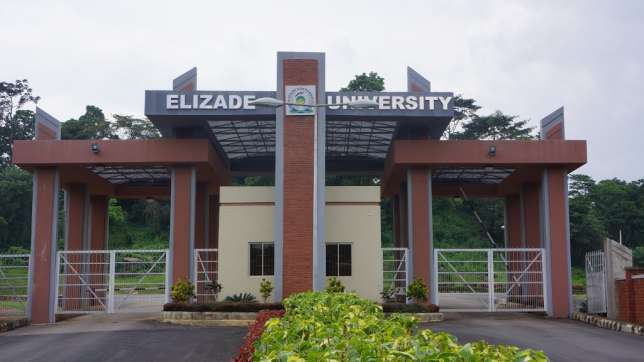
ILARA-MOKIN, ONDO STATE: A decade ago, this community situated about five kilometres west of Akure was little more than a quiet agrarian settlement, known mainly to its own people and a few neighbouring towns. Today, Ilara-Mokin stands as a growing semi-urban centre with new schools, bustling shops, steady employment and a presence that reaches far beyond Ondo State. At the heart of this change is Elizade University, the institution founded by Chief Michael Ade. Ojo that has reshaped the town’s fortunes almost beyond recognition.
Ilara-Mokin’s roots stretch deep into Yoruba history. Oral traditions trace its founding to migrations from Ile-Ife. The first Alara, or king, is linked to Obalufon Modulua Olutipin, associated with early Ife rulers of the 14th to 16th centuries, who established settlements before returning to the ancestral homeland. His descendants and supporters, known as the Ara people, moved through the region for generations until they settled permanently in the mid-1800s amid the upheavals of the Yoruba civil wars. The name itself is said to come from a local phrase meaning “the house of Ara knows the ọkin bird”, a reference to a prestigious white bird long associated with royalty. With an estimated population of around fifty thousand, the town remained largely agricultural, supported by a community health centre and a police station, until recent years.
That picture began to shift decisively with the arrival of Elizade University. Academic activities commenced in the 2012/2013 session after the institution received its provisional licence early in 2012. What followed has been a rapid transformation of the physical, economic and social landscape. Once almost unknown outside its immediate surroundings, Ilara-Mokin is now firmly on the world map because of the university’s presence.
The economic ripple effects have been immediate and tangible. University records show that about two hundred indigenes of Ilara-Mokin are gainfully employed by theinstitution, while local artisans have secured numerous contracts. Of a total staff strength of roughly six hundred (excluding adjunct academic staff), some four hundred live in the community itself and others reside on campus. The daily spending power of these staff members and the student population has powered a noticeable upsurge in commercial activity. Supermarkets and shopping outlets have sprung up to meet new demand, turning once-quiet streets into centres of trade.
Education has expanded alongside commerce. The growing number of university staff families and newly empowered local residents has driven higher enrolment in early schooling, leading to the establishment of four nursery and primary schools in the town. What was once a community with limited educational options beyond basic levels now benefits from a denser network of learning opportunities for its children.
The change is visible in the everyday life of the town. Roads that once served mainly farmers, now constructed by Chief Ade Ojo, now carry university traffic. Markets that once traded primarily in agricultural produce now supply a broader range of goods.
Housing demand has risen as more people choose to live close to the campus. In the space of roughly fourteen years, an agrarian rural community has taken on the character of an emerging urban centre.
None of this would have been possible without the vision and sustained commitment of Chief Michael Ade. Ojo, a native son whose earlier investments in scholarships, school laboratories, an e-library and other community projects prepared the ground. The university has proved the most powerful catalyst of all, converting private educational ambition into lasting local development.
Ilara-Mokin’s story is still unfolding. Yet the evidence of the past decade is already clear: a university planted in a rural community can do more than educate students.
It can rewrite the economic and social map of an entire town, turning quiet farmland into a place of opportunity, visibility and growth. For the people of Ilara-Mokin, the transformation is no longer a promise, it is a lived reality.
Omololu Adegbenro is the Registrar, Elizade University, Ilara-Mokin, Ondo State.
Nigeria.
Gatekeepers News is not liable for opinions expressed in this article; they’re strictly the writer’s.